The catering contract, not etiquette, sets the clock on chasing wedding RSVPs. Most UK venues want final numbers 7 to 14 days before the wedding, and a few contracts stretch to 21. So the first nudge belongs 10 days before your printed reply date. Tone matters, but it matters far less than starting early enough for a silent guest to become a yes or a no.
Every couple is surprised by how many people fail to reply. It is not a sign the guest list was wrong or the wording unclear. People are bad at answering things with no consequence they can feel, and a wedding four months off is no consequence at all.
Work backwards from the catering contract, not forwards from the invitation
The standard advice is a reply date three to four weeks before the wedding. That is broadly right, and it explains nothing. The real reason is the caterer’s cut-off: you need a buffer between the two in which to chase. So find the clause, read the number, and build every other date backwards from it.
Then chase in waves rather than in one panicked burst. The countdown below assumes a hotel with a standing kitchen. A marquee caterer cooking in a field will want longer, because their ordering is a one-off rather than part of a weekly delivery.
| Point in the countdown | What to do | Who does it |
|---|---|---|
| Signing the catering contract. | Find the final-numbers clause and diarise it. | Whoever holds the budget. |
| 10 to 12 weeks before. | Invitations out, with a reply date 3 to 4 weeks before the wedding. | You. |
| Reply date minus 10 days. | First nudge, same channel as the invitation, naming the date. | You. |
| The reply date itself. | Nothing. Leave it 48 hours. | Nobody. |
| Reply date plus 2 days. | Second nudge, one to one, using the person’s name. | You and your chasers. |
| Reply date plus 5 days. | Split the list. Day guests get a call, evening guests get a text. | Delegated chasers. |
| Reply date plus 8 days. | Final attempt, with a cut-off date written into the message. | Remaining day guests. |
| Caterer’s deadline minus 2 days. | Silence counts as a no. Submit the numbers. | You. |
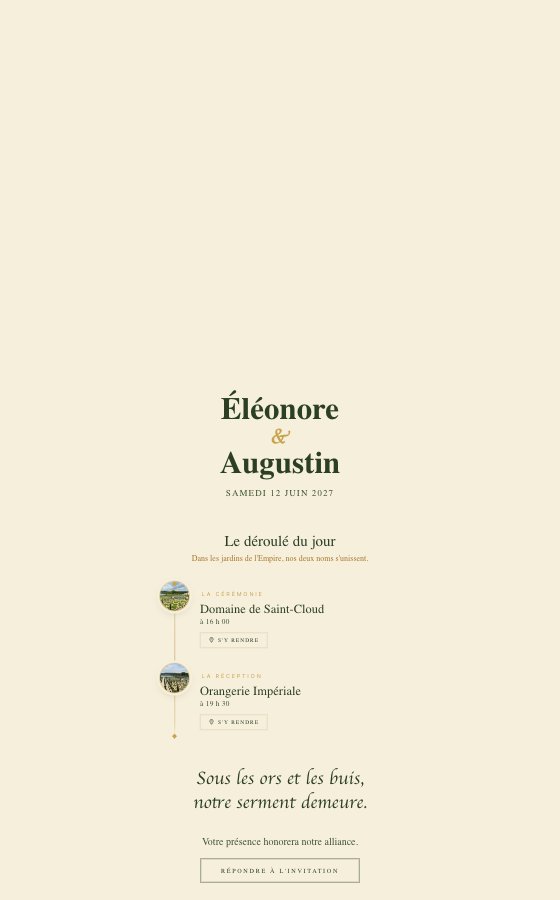
A TislitEvent invitation records who opened it as well as who replied, which is the difference between chasing a guest who never saw the card and one who has not decided.
When should you start chasing wedding RSVPs?
Ten days before the reply date printed on the card, and not after it. A nudge that arrives while the deadline is still ahead reads as a reminder. The same words a week late read as a complaint. In practice the early nudge converts best, because the guest can still act on time and keep their self-image intact.
Leave the reply date itself alone. Replies land in the 48 hours after a deadline the way library books do, and a message sent on the morning of the date crosses with half a dozen of them. So wait two days, then start the one-to-one round.
Day guests and evening guests need different deadlines
Only the day list drives the catering numbers, because only day guests eat the wedding breakfast, the seated meal, whatever the hour. Evening food is a buffet, a hog roast or a food truck, costed with far more slack. So chase the day list hard and early, and give the evening list a later, softer date. Most couples chase both at one pitch and exhaust themselves on the tier the kitchen cares least about.
Why guests go quiet, and why it is rarely rudeness
Five causes account for nearly every missing reply, and none of them is contempt.
- They have not decided, and replying feels like deciding. Childcare, a shift pattern, a train fare, an ex who might be there. Silence is cheaper than working it out.
- They think they already replied. They told you at the pub in March. To them, that was the RSVP.
- The invitation reached one half of a couple who assumed the other half had dealt with it. This is the commonest cause of a missing reply from a married couple.
- They are not certain they were really invited. Evening guests and plus ones do this constantly, and will not risk asking.
- Money. A hotel room, a gift, an outfit, perhaps a day of unpaid leave. Some guests are working out whether they can afford it, and will not say so.
So write the chase assuming embarrassment rather than rudeness, and make replying tiny. One tap, one word, one number.
The reply rate you should actually expect
Treat confident percentages with suspicion. According to The Knot, whose planning benchmark is editorial rather than survey-derived, roughly 80% of invited guests accept and about 20% decline. The same page cites a separate RSVPify range of 60% to 85%. Those are acceptance figures rather than reply figures, which is a different measurement.
On replies I can only offer an estimate from practice. Expect a quarter to a third of the list to be silent on the reply date, and most of those to answer within a week of being asked directly once. The genuine never-replies are a handful, usually the maybes from the start.
The cost of leaving them unresolved is not abstract. Hitched put the average UK cost per guest at £272 for 2025 weddings, up 4% from £261 the year before, across a survey of 2,020 couples. Each unanswered card is roughly that much money in limbo, which is why chasing wedding RSVPs deserves a schedule rather than an apology.
Who should be chasing wedding RSVPs, and it is not always you
Chasing your own wedding invitation is faintly humiliating, and it is also slow. So delegate it in writing, with names against households.
- Parents chase their own invitees. Your mother’s cousins are her job. She invited them, she knows their landline, and they reply within a day.
- The best man and chief bridesmaid chase the friendship groups. A message from a mate carries no social charge.
- One person owns the list. Not two. Two chasers produce double-nudges, which are worse than none.
- You take the sensitive ones yourself. Anyone in doubt for a real reason, illness, a family rift, money, hears from you rather than from a delegate with a spreadsheet.
Match the channel to the guest
- Guests over about 70, and your parents’ friends: telephone, early evening. A text to someone who does not read texts is not a chase.
- Close friends and anyone your own age: WhatsApp, one to one. Never the group chat, where everyone waits for someone else to answer first.
- Colleagues: email. A text reads as an intrusion, whereas email reads as admin, which is the register you want.
- Couples where you only really know one of them: message the one you know and name both, so the half-reply cannot happen.
- Evening guests: text or WhatsApp, and keep it short. Email is too formal for the tier and gets ignored.
A digital invitation has one structural advantage here. It shows who opened the card and did not reply, which separates never received it from received it and has not decided. TislitEvent records opens alongside replies for that reason. With paper you are guessing, and at the Royal Mail 2nd Class Large Letter rate of £1.55, held since April 2026, posting 100 invitations costs £155 before anything is printed. Add a stamped reply envelope at 91p each and the postage alone reaches £246.
Five messages you can send as they are
Each sits at a different temperature. Never send the same wording twice to one person, because the repeat reads as automated.
| Situation | Channel | Message you can copy |
|---|---|---|
| First nudge, ten days out. | WhatsApp or text. | Hi Sarah, no panic, but replies close on 14 May and yours is outstanding. Ten seconds and it is done. If the answer is no that is completely fine, I just need it either way. |
| Deadline passed, close friend, day guest. | WhatsApp. | Tom, final numbers go to the caterer a week on Friday, so I have to be annoying. In or out for 6 June? Fine either way, I just need something for the box. |
| Older relative who does not use email. | Telephone. | Auntie Margaret, it is Ellie. I am ringing round about the wedding in June. Are you and Uncle Ray able to come? Anything either of you cannot eat, for the caterer? That is you both down as coming. |
| Colleague or professional acquaintance. | Email. | Subject line: wedding, 6 June, reply needed by Friday. I am finalising numbers with the venue this week and do not have your reply. One line is plenty. |
| Final attempt, with a cut-off. | Email or text. | Hi Claire, last time I will ask, promise. Final numbers go in on Wednesday 27 May. If I have not heard by then I will assume you cannot make it, and that is genuinely not a problem. |
The maybe guest, and when to count someone as a no
Give the maybe a cost
Probably is not an answer. It is a way of avoiding one, and it costs the guest nothing while it costs you a seat, a meal and a line on the table plan. Only a date with a consequence resolves it: after this date the number is written down and cannot change. So say that plainly, name the date, and offer a graceful downgrade.
The evening reception is the landing place for a real maybe, and in Ireland the same move is an invitation to the afters. Where the maybe is genuine, a due date near the wedding or a relative in hospital, mark them a no and say so warmly. Something like this: “I have taken you off the list for the meal, but if it works out, do come in the evening”.
Three attempts, two channels, then it is a no
The rule I give couples is three attempts, in at least two channels, over at least ten days. If the third carries a cut-off and that date passes in silence, the answer is no. Write it down, submit the number, and stop thinking about it. Almost nobody turns up having been marked absent, and where one does, most venues can add a cover on the day at a price.
Is it rude to keep chasing wedding RSVPs?
No, and the etiquette question is the wrong one. A guest who has not replied has left you holding a decision that was theirs to make, so asking twice is the polite version of that. What is genuinely rude is a group message that names nobody, a public countdown, or a chase that arrives with a lecture attached.
Keep the register flat instead. Name the person, name the date, and give an exit. “If the answer is no that is completely fine, I just need it either way” is the most effective sentence in the whole exercise, because it removes the fear of disappointing you, which is what the silence usually is.
Chasing wedding RSVPs inside your own family is the hard part
Friends reply to a deadline. Family reply to a relationship, which is why the worst offenders on any list are blood relatives. They assume that because you know them the formalities do not apply, and they are half right, which is the annoying part.
Three things work. First, get the message from the right generation, because a parent asking their own sibling lands very differently from you asking your aunt. Second, remove the ambiguity about who is invited, since an assumed extra cousin at £272 a head is a real cost. Third, use the caterer as the villain, because the venue needs numbers by the 27th is unarguable in a way I need to know is not.
One relative will reply on the day the numbers are due, cheerfully, as though this were normal. Every wedding has one. Build the buffer, delegate half the list, and finish before the kitchen shops.
Frequently asked questions
How many guests will miss the reply date?
Expect a quarter to a third of the list to be silent on the day itself. That is an estimate from practice rather than a survey figure, and it varies with how many evening guests you have. Most of those silent households reply within a week of one direct approach. Plan the chasing window on that basis: ten days, two channels, one named person per household.
Should you print a fake reply date on the invitation?
No. Guests talk to each other, so a soft date is discovered, and every later message then carries no weight. The padding you want already exists in the gap between the reply date and the caterer’s cut-off. A fake date only pushes the question so early that people cannot honestly answer it yet, and an early guess is worse than a late fact.
What do you do about a guest who never replies at all?
After three attempts in two channels, with a cut-off written into the last one, mark them as not attending and submit the number. Say so in that final message, so the decision is not a surprise to anyone. If they surface in the last week, ask the venue about adding a cover. Most can manage it at a price, and a few genuinely cannot.
Does a digital invitation make chasing wedding RSVPs any faster?
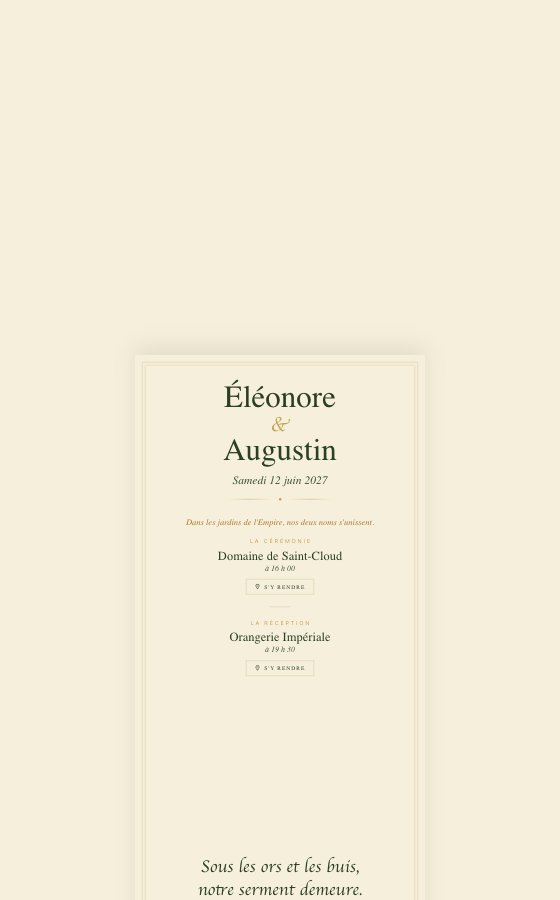
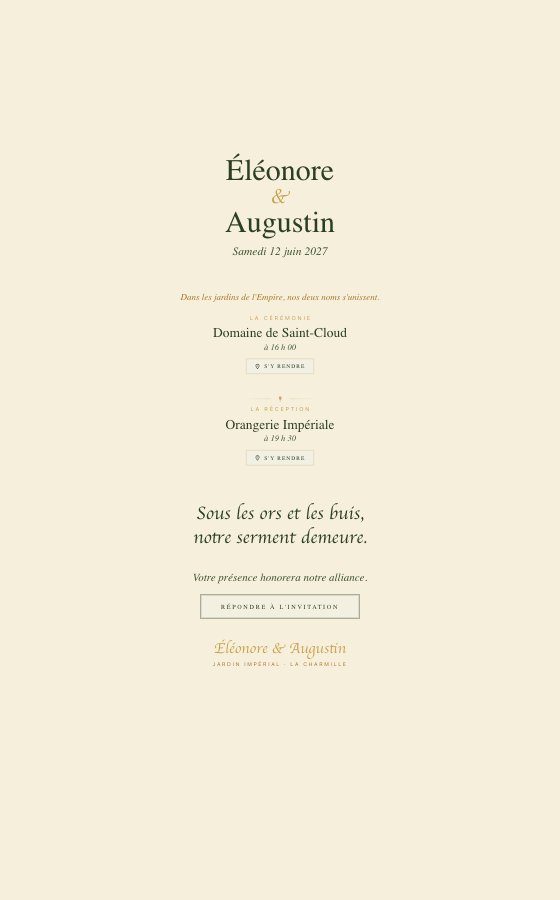
It removes two failure modes rather than changing anyone’s character. The card cannot sit unopened under a pile of post, and you can see who opened it without replying, which tells you whether to resend or to chase. The reply is then one tap, and a form asking a closed question gets a closed answer instead of a maybe.
A flat £/€44.90 covers unlimited guests and keeps the RSVPs, dietary requirements, table plan and guest book in one place instead of a spreadsheet and a pile of reply cards.
One payment · unlimited guests · ready in 5 minutes
Sources: Royal Mail · Hitched · The Knot · Wikipedia
Read next: Evening Wedding Invitation Wording: Examples, Timing and Costs · Wedding Invitation Wording: 15 Examples for Every Family Situation · How to Make a Wedding Guest List: The Method That Ends the Argument