Most wedding invitation wording fails in the first line, the one that names the host. Get that wrong and the rest of the card reads as though it had been borrowed from another family’s wedding. The 15 openings below cover every household arrangement in British use, from a church ceremony to a second marriage with children on both sides.
Everything after the host line is logistics: who, when, where, what to wear, how to reply. That part is easy, and almost nobody gets it wrong. The host line is where families are quietly ranked, and where a card can offend somebody who will never mention it to you.
Copy any of it and change the names. An invitation is a functional document that happens to be pretty, so inventive phrasing is a mistake rather than a flourish.
Who hosts decides your wedding invitation wording
Whoever hosts speaks, in the third person, and the couple are referred to. The moment the couple host themselves, the sentence flips to first person and the register drops with it.
Two phrases carry most of the work. Request the honour of your presence belongs to a ceremony in a place of worship. Request the pleasure of your company covers everything else. American printers keep the British spelling here, so « honor » on a card means a US template.
| Who is hosting | Wording to copy |
|---|---|
| Bride’s parents, church ceremony. | Mr and Mrs John Whitfield request the honour of your presence at the marriage of their daughter Eleanor Jane to Mr Thomas Grant. St Mary’s Church, Alderley, on Saturday 12 June 2027 at half past one o’clock. |
| Both sets of parents, secular venue. | Mr and Mrs John Whitfield and Mr and Mrs Peter Grant request the pleasure of your company at the marriage of Eleanor and Thomas. Hedsor House, Saturday 12 June 2027 at two o’clock. |
| The couple, relaxed register. | Eleanor Whitfield and Thomas Grant are getting married at Hedsor House on Saturday 12 June 2027. Please arrive from 1.30pm. |
| The couple, families acknowledged. | Together with their families, Eleanor Whitfield and Thomas Grant request the pleasure of your company at their marriage on Saturday 12 June 2027 at Hedsor House. |
The fourth is now the standard British opening. It names the parents without making them the speaker, which suits the common arrangement where several people are paying.
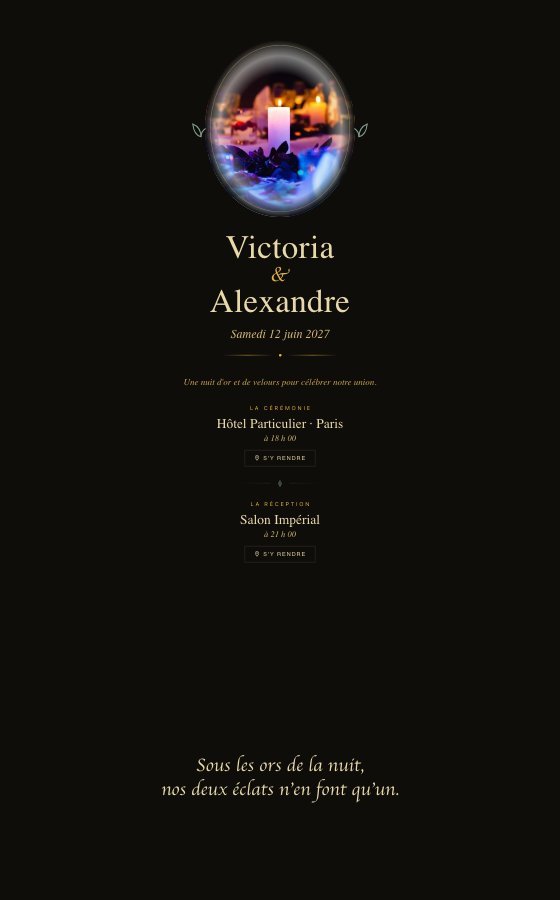
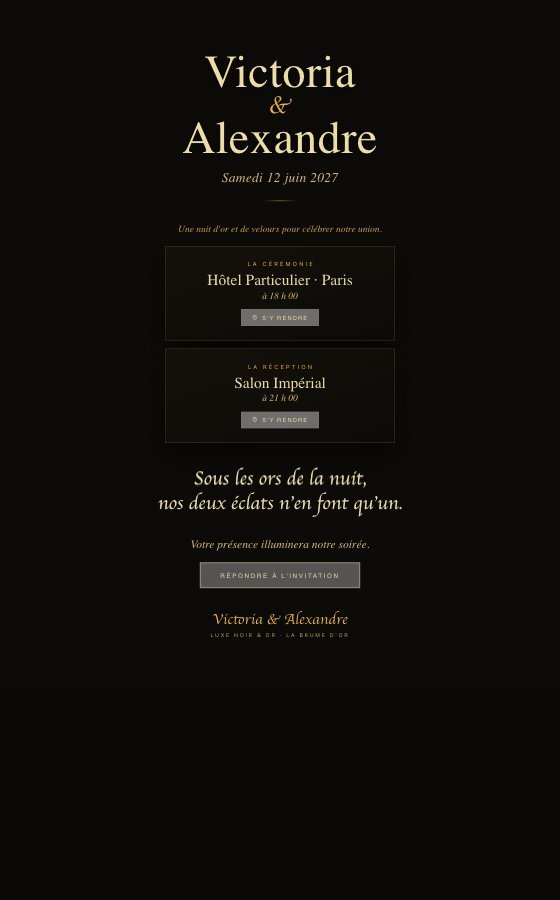
Every TislitEvent design carries one host line and one register across the invitation, the RSVP page and the evening card, so the wording never changes voice halfway through.
Divorced, widowed and remarried parents: whose name goes first?
These are the openings couples ask about most often, and the ones generic wedding invitation wording handles worst. Four patterns cover almost every case.
| Situation | Wording to copy |
|---|---|
| Widowed mother hosting alone. | Mrs Margaret Whitfield requests the pleasure of your company at the marriage of her daughter Eleanor Jane to Mr Thomas Grant. Hedsor House, Saturday 12 June 2027. |
| Divorced parents, both hosting, neither remarried. | Mrs Margaret Whitfield and Mr John Whitfield, set on two separate lines with the mother first, request the pleasure of your company at the marriage of their daughter Eleanor Jane. |
| Remarried mother hosting with a stepfather. | Mr and Mrs David Ellis request the pleasure of your company at the marriage of her daughter Eleanor Jane Whitfield to Mr Thomas Grant, Saturday 12 June 2027. |
| Honouring a parent who has died. | Eleanor Jane Whitfield, daughter of Margaret Whitfield and the late John Whitfield, and Thomas Grant invite you to their marriage at Hedsor House on Saturday 12 June 2027. |
A widow was once styled by her late husband’s name, Mrs John Whitfield. That convention is dead, so use her own forename. Divorced parents who both host take separate lines, mother first, with no « and » joining them, because that word implies a marriage which no longer exists.
Once a parent has remarried, the hosts’ surname stops matching the bride’s. So « their daughter » becomes « her daughter », and the bride is given in full. Where a parent has died, naming them in the couple’s own line is warmer than forcing them into a host line they cannot occupy.
Formal or relaxed: hold one register of wedding invitation wording
Pick a register and keep it to the foot of the card. The commonest failure is a formal third-person opening followed by « Dress code: whatever makes you happy! » along the bottom edge.
Formal means third person, no contractions, no exclamation marks, and the date written as Saturday 12 June 2027. Spelling the year out in words is an American formality that never took hold here. Relaxed means first person and the venue named the way people say it aloud. It is not, however, vague: « sometime in the afternoon » is a phone call you will have to take.
What order should the information go in?
Guests read invitations in the order they expect, so a card that reshuffles it feels wrong before anyone can say why. Nine lines, in this sequence.
- Host line.
- Request line: « request the pleasure of your company », or « invite you to ».
- The couple’s names, first-named partner first, in full if the card is formal.
- Day and date: Saturday 12 June 2027, with no ordinal in formal wording.
- Time, given as the arrival time rather than the ceremony time.
- Ceremony venue with its town, not the full postal address.
- Reception line: « and afterwards at », or the wedding breakfast venue where it differs.
- Reply instruction and a reply-by date.
- Any restriction, in two words: adults only, black tie.
That sequence holds across every register of wedding invitation wording, formal or plain. Everything else — directions, parking, the hotel block, the gift list — belongs on a separate insert or on the invitation page, never on the card itself.
How do you word the time so people arrive on time?
Print the arrival time rather than the ceremony time. Guests read whatever number they see as the moment to walk in, and a fair proportion are still parking at that point.
The formula is 1.30pm for a 2pm ceremony, or « half past one o’clock » on a formal card. A church absorbs stragglers. A register office does not, because that ceremony is a booked slot with another couple waiting behind it, so allow the full 30 minutes there.
British punctuation puts a full stop in the time: 2.00pm, not 2:00pm. And « carriages at midnight » means the party ends at midnight, which a surprising number of guests do not know. « Bar closes 11.30pm, carriages at midnight » removes the puzzle for them.
Titles, double-barrelled names and the traps between them
- Ms, Miss or Mrs. Ask rather than guess. Ms is the default where the preference is unknown.
- Doctors, clergy and officers. Professional and military titles outrank social ones and go first: Dr Ana Lopez, The Reverend Simon Hart, Captain James Reid. Where one partner holds the title, that name leads.
- Double-barrelled names. Follow the family’s own spelling, hyphen or no hyphen. Jones-Whitfield and Jones Whitfield are different surnames to the people who hold them.
- « And Guest » is a fallback, not a default. Print the partner’s name wherever you know it: Mr James Reid and Ms Ana Lopez. According to Bridebook’s plus-one guidance, the envelope settles the plus-one, not a later conversation.
- Same-sex couples. No separate rule is needed. Order the names by what sounds better aloud, then hold that order across the whole suite.
What should never appear in your wedding invitation wording?
- Gift lists and money requests. In Britain a small card tucked in with the invitation is accepted. Printed on the invitation itself, it is not. In the United States it is a breach even as an insert, because registry details belong on the wedding website.
- Dress-code arguments. Two words will do: « Black tie », or « Lounge suits ». Three sentences on what you would rather people did not wear reads as anxiety, and guests wear what they own regardless.
- Children, mostly. The invitation is addressed to named people, so a card to Mr and Mrs James Reid does not invite their children. One line catches the rest: “Eleanor and Thomas have chosen an adults-only celebration. This invitation is for Mr and Mrs James Reid.”
- The stamped reply envelope. Most suites with an RSVP card and inserts exceed the Royal Mail Letter limit of 240 by 165 by 5mm, so they post as Large Letters. According to Royal Mail’s 2026 rates that is £1.55 second class, or £155 for a hundred invitations, plus £91 in reply stamps.
TislitEvent collects the reply, the dietary requirements, the table plan and the guest book on the invitation page itself, at a flat £/€44.90 for unlimited guests.
Civil, religious and second marriages
Ceremony type changes the request phrase, and sometimes changes whether the word « marriage » is accurate at all. A blessing after a register office ceremony is not a marriage and must not be worded as one.
- Register office, relaxed. Eleanor and Thomas are getting married at Chelsea Old Town Hall on Friday 11 June 2027 at 11am. Please be seated by 10.45am, because the registrar runs to the minute. Lunch to follow at The Ivy Chelsea Garden.
- Church of England, fully formal. Mr and Mrs John Whitfield request the honour of your presence at the Solemnisation of the Marriage of their daughter Eleanor Jane to Mr Thomas James Grant. St Mary’s Church, Alderley, on Saturday 12 June 2027 at half past one o’clock, and afterwards at Hedsor House.
- Humanist ceremony in Scotland. Eleanor Whitfield and Thomas Grant invite you to their humanist wedding, conducted by celebrant Ruth McAllan, at Glen Tanar Estate, Aberdeenshire on Saturday 12 June 2027 at 2pm. Dinner and dancing to follow.
- Blessing after a civil ceremony. Eleanor and Thomas were married quietly at Chelsea Old Town Hall on 11 June. They invite you to a Service of Blessing at St Mary’s Church, Alderley on Saturday 10 July 2027 at two o’clock, and afterwards to the wedding breakfast.
- Second marriage, children on both sides. Eleanor Whitfield and Thomas Grant, together with Sophie, Alice and Jack, invite you to celebrate their marriage at Hedsor House on Saturday 12 June 2027 at 2pm.
The old rule that a second-time bride should marry quietly and skip a formal invitation is dead. Naming the children, on the other hand, does real work.
The legal dates sitting behind the wording
None of this appears on the card, but it sets the date you are printing. In England and Wales, notice must be given to the register office 28 days before the ceremony, and both partners must have lived in England or Wales for 7 days before giving it. Once notice is given, the couple have 12 months in which to marry.
For a Church of England wedding, banns are read on three Sundays during the three months before the date, and are usually arranged about four months ahead. Banns are read where each of you lives, plus the church of marriage if that is somewhere else. Couples living apart therefore need readings in two or three parishes.
Scotland runs a separate system. According to the City of Edinburgh Council, marriage notice goes to the registrar on form M10, a minimum of 29 days before the ceremony and no more than 3 months ahead. Six to eight weeks is the recommended window. Northern Ireland has its own rules again, so check locally rather than assuming.
Day guests, evening guests and the second card
The two-tier guest list is the structural fact of a British wedding, and the point where imported wedding invitation wording falls apart. Day guests get the ceremony, the drinks reception, the wedding breakfast and the speeches. Evening guests arrive from about half past seven for the evening food, the first dance and the band.
It exists because venues charge per head for the seated meal. Hitched’s survey of 2,020 couples married in 2025 puts that cost at £272 a head, up 4% on £261, so the split is arithmetic rather than rudeness.
- Evening invitation, UK. Eleanor and Thomas invite you to join them for an evening of celebration at Hedsor House on Saturday 12 June 2027 from 7.30pm. Hog roast at 8.30pm, first dance at nine, carriages at midnight.
- Day invitation with the running order. Ceremony 1.30pm. Drinks reception 2.15pm. Wedding breakfast 4pm. Speeches 6pm. Evening guests join at 7.30pm. Carriages midnight.
The conventional openings are “join us for an evening of celebration” and “at the evening reception from 7.30pm”. Either one works; what matters is that neither repeats the ceremony details.
In Ireland the same card invites you to the afters, and the local word belongs on it. One rule saves more trouble than any phrasing: the save-the-date list and the day-guest list must be identical, because sending a save the date and later issuing an evening card is the own goal that no wording repairs.
Frequently asked questions
How formal should wedding invitation wording be?
Match the ceremony, not the venue. A place of worship takes « request the honour of your presence » and third person throughout. A register office or a barn takes « invite you to », first person and plain dates. The one thing that never works is mixing the two, so a formal opening with a jokey dress-code line underneath reads as borrowed.
When should wedding invitations go out?
Six to eight weeks before the wedding for a UK date, and ten to twelve weeks where guests are travelling or it falls on a bank holiday. Work the reply-by date backwards from the catering contract: most venues want final numbers 7 to 14 days out, some as much as 21. Subtract a week for chasing, then print that date.
Whose name goes first on the invitation?
The host’s name leads, which is why the host line is decided before anything else. Within the couple, British convention puts the bride or the first-named partner ahead of their partner, and a professional or military title outranks a social one. For same-sex couples there is no convention, so choose the order that sounds better and keep it everywhere.
Can one card cover the ceremony and the evening?
No, and trying to produces the commonest complaint in this whole subject. Two audiences need two cards, because an evening guest who reads a ceremony time will arrive at two o’clock expecting a seat. Good wedding invitation wording gives one instruction per line, so send both cards on the same day with their own reply-by dates.
Whichever of the fifteen openings you settle on, a flat £/€44.90 carries it to unlimited guests, with RSVP, dietary requirements, table plan and guest book on the same page.
One payment · unlimited guests · ready in 5 minutes
Sources: Royal Mail · Hitched · Bridebook · Church of England
Read next: How Much Do Wedding Invitations Cost? Real UK Prices and Postage · Digital Wedding Invitations vs Paper: The Honest UK Comparison · Evening Wedding Invitation Wording: Examples, Timing and Costs