Most advice on eco friendly wedding invitations stops at the paper. The bigger numbers sit elsewhere. A modest suite weighs about 26g per guest, and posting 100 of them costs £246 in Royal Mail stamps at 2026 rates. Fibre matters, but it matters less than weight, finishes and freight.
Paper is the easiest thing to certify and the easiest thing to put on a product page, so that is where the conversation usually ends. Wrong end of the problem. Twenty years of specifying stationery produces a consistent pattern: the burden sits in how much a suite weighs, what has been bonded to it, and how far it travelled before reaching a postbox.
What do the labels on eco friendly wedding invitations certify?
FSC certifies the fibre’s paperwork, not the finished card
Forest Stewardship Council certification is a chain-of-custody scheme. It tracks fibre from an audited forest through the mill, the merchant and the printer, and confirms that nobody swapped it for uncertified pulp. Worth having, and worth asking for.
Nothing in it covers the energy used to make the paper, the emissions of the press, the distance the sheet travelled, or the ink, foil and lamination applied to it. A card can be FSC Mix certified, laminated in polypropylene, foiled in metallised polyester, printed abroad and posted here, and every word of the claim stays true.
Recycled is a percentage almost nobody publishes
Recycled content splits in two. Post-consumer waste is paper that was used and then collected. Mill broke is offcuts that never left the factory, and it has always gone back into the process, because binning it would be commercially absurd. Counting mill broke as recycled content is accurate and meaningless.
Ask for post-consumer waste as a percentage. « 100% post-consumer recycled fibre » is a claim you can check, while « recycled paper » is not. De-inking also uses water, heat and chemistry, and it shortens the fibre. Recycled stock beats virgin fibre, and it is not a free lunch.
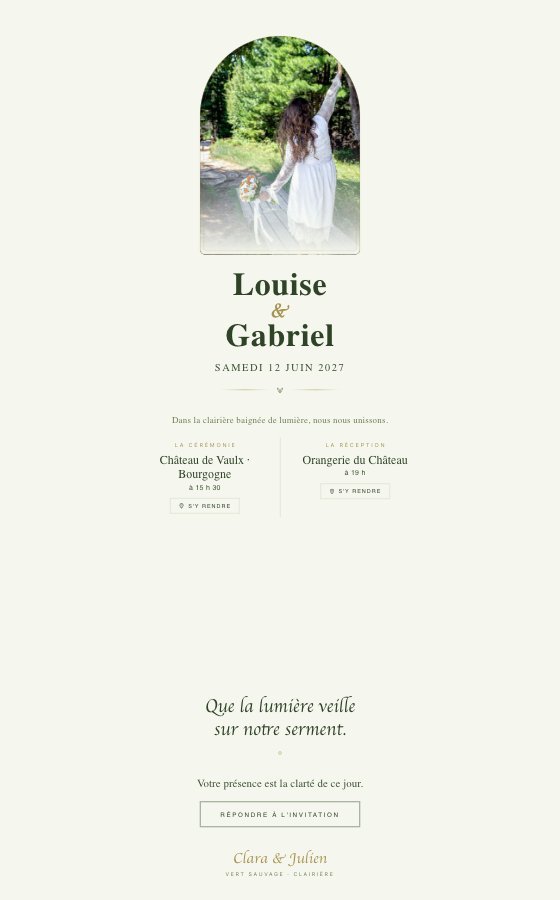
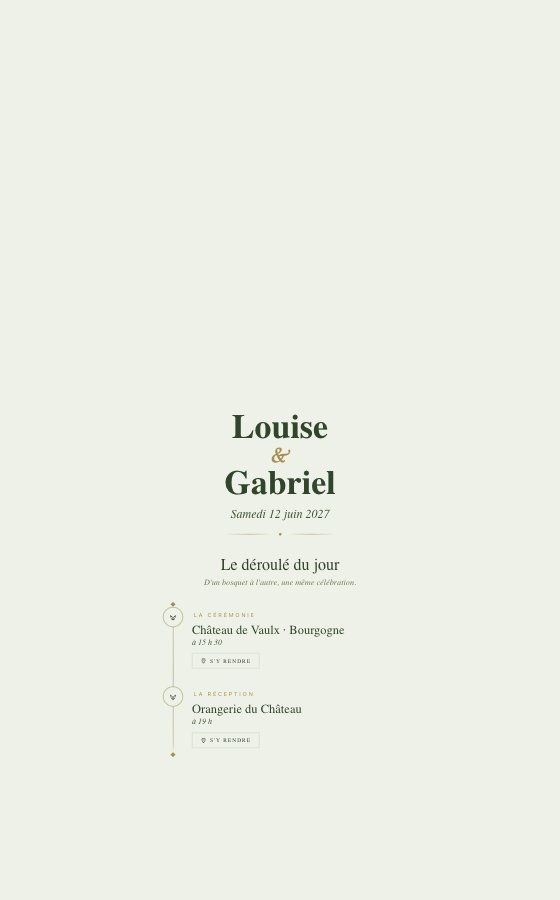
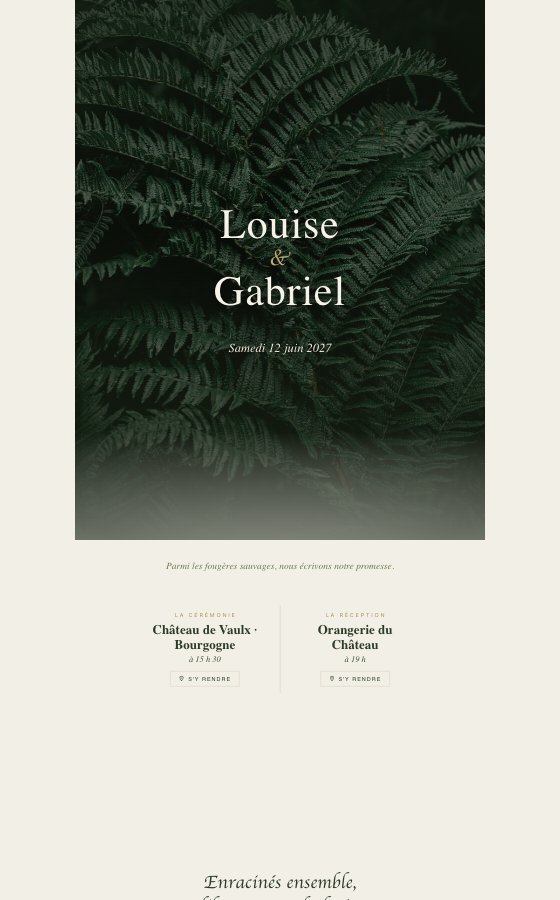
Every TislitEvent design exists only as a page, so there is no lamination, no foil carrier and no reply envelope to send back through the post.
Weight is the number that decides almost everything
Grams per square metre is arithmetic rather than opinion, so a suite can be calculated instead of guessed. A 127 × 178mm card in 350gsm covers 0.0226 square metres and weighs about 8g. Duplexed to 600gsm it reaches 13.6g before adhesive.
| Component | Light suite | Heavy suite |
|---|---|---|
| Invitation card. | 350gsm, about 8g. | 600gsm duplexed, 13.6g. |
| RSVP card. | 300gsm, 4.7g. | 350gsm, 5.4g. |
| Details card. | None. | 300gsm, 4.7g. |
| Outer envelope. | 120gsm, 9.4g. | 135gsm, 10.5g. |
| Envelope liner. | None. | 100gsm, 3g. |
| Ribbon or belly band. | None. | About 3g. |
| Reply envelope. | 100gsm, 4g. | 100gsm, 4g. |
| Per guest. | About 26g. | About 44g. |
| Across 100 invitations. | 2.6kg. | 4.4kg. |
Both suites sit in the same 0 to 100g postage band, so the extra 1.8kg of card buys nothing at the counter. Duplexing is an aesthetic decision carrying a purely environmental cost.
How much does posting 100 invitations actually cost?
Royal Mail’s Letter format caps at 240 × 165mm × 5mm and 100g. Almost any suite with an RSVP card and an insert breaches the 5mm limit and posts as a Large Letter instead. On the rates effective 5 October 2026, a 2nd Class Large Letter to 100g is £1.55, and a 2nd Class Letter is 91p.
- 100 invitations at 2nd Class Large Letter: 100 × £1.55 = £155.
- 100 stamped reply envelopes at 2nd Class Letter: 100 × 91p = £91.
- Total postage: £246, before card, envelopes or ink.
- The same job at 1st Class: £3.30 plus £1.80 per guest, so £510.
Set that against the average UK stationery spend of £378, according to Bridebook’s UK Wedding Report. Postage alone can consume two thirds of the line before a single card is printed. Hitched’s survey of 2,020 couples puts the average wedding at £21,990, so stationery is small, yet the postage share inside it is the part couples never model.
What 2.6kg means in transport terms
No credible per-item carbon figure for a posted Large Letter is available to cite, and the numbers circulating in wedding content are estimates dressed as data. Qualitatively, those 100 letters ride in a network already running down every street, so the marginal effect of 2.6kg is small. The transport that counts is upstream and invisible: cotton rag pulped abroad, freighted to a trade printer, couriered to a reseller, then posted again.
Foil, lamination and duplexing end a card’s second life
A 600gsm duplexed cotton card with rose gold foil is the current luxury default, and it is not an eco product whatever the paper certification says. Duplexing bonds two sheets with adhesive, which frustrates repulping.
Foil is a metallised polyester film transferred under heat. The metal layer is vanishingly thin, the carrier and the sizing are not, and mills treat them as contamination. Lamination, including the soft-touch matt finish everyone asks for, is polypropylene film across the whole sheet. Most UK kerbside collections reject laminated card, along with glitter, acetate and plastic sleeves.
A rough test works well enough. If you cannot tear it cleanly by hand, a mill will struggle to separate the fibre. Letterpress and blind deboss give the same tactile effect with no added material, because they spend press time rather than plastic.
This is the awkward part of the category. Almost everything sold as a premium finish on eco friendly wedding invitations works against the recyclability the same page is advertising. A supplier cannot honestly offer rose gold foil and kerbside recycling in the same sentence, so read the two claims together rather than separately.
Seed paper, plantable cards and handmade stock
Seed paper is handmade pulp with seeds embedded in it, and it germinates unevenly. The seeds are pressed, dried, then stored for months in a warehouse, a drawer and a guest’s kitchen, and viability drops through all of it. Germination also needs the recipient to tear up the invitation and plant it, which most guests never do.
It costs several times the price of comparable uncoated card and constrains the design hard. The surface is rough, fine serif type breaks up, and it takes neither foil nor lamination. A generic wildflower mix sold across several countries is not necessarily right for a British garden either.
Tree-free and handmade papers such as hemp, bamboo and bagasse follow similar logic, and some are genuinely good. Cotton earns a raised eyebrow, since it is water-intensive to grow, and cotton rag is usually textile offcuts rather than fresh crop. Ask the supplier which.
None of this makes seed paper a bad product. It makes it a decorative one, priced and marketed as an environmental one. If the couple simply likes the texture and the story, that is a legitimate reason to buy it, and a short run of 30 cards costs little and wastes little.
Inks, envelopes and the stamp on the reply card
Vegetable inks are true and minor
Vegetable-based ink usually means the mineral oil in the ink vehicle has been swapped for soy or linseed. It is not a regulated term, the pigments are generally unchanged, and the real benefit is that soy-based inks de-ink more readily. It also amounts to a fraction of a gram per card. A supplier leading with vegetable inks while selling laminated 600gsm duplex is answering the small question to avoid the large one.
The envelope is usually the heaviest thing in the pack
A C5 envelope in 120gsm outweighs the RSVP card inside it. Peel-and-seal envelopes carry a silicone-coated release strip binned at the point of sending, which is plastic multiplied by the guest list. Gummed envelopes have none. Liners are a second sheet glued inside a first, so 3g each, and a single-material item becomes a bonded one.
Ribbon deserves a line of its own. Satin ribbon is polyester, silk is not and is priced accordingly, and either way the guest bins it within ten seconds of opening the envelope. Belly bands made from the same stock as the card at least recycle with it.
Return postage is the line everyone forgets
A stamped addressed reply envelope means a second print run carrying the couple’s address, plus 100 stamps at 91p. A meaningful share never come back, because the guest texts instead, or the card sits behind the kettle until a phone call settles it. Those stamps are spent regardless. A link or QR code removes 4g per guest, £91 of postage and the print run, and it collects the replies into one list.
Where it is printed matters more than what it is printed on
Many British stationery brands are design studios that outsource printing, often to trade printers in continental Europe or further afield, with the cards freighted back. « Printed in the UK » sometimes describes where the design work was done.
The comparison is not simple. A large efficient press running tens of thousands of sheets may use less energy per card than a small local machine running a hundred. What local printing reliably reduces is dedicated freight, handling stages and the odds of a reprint crossing a border twice. It also lets couples see the stock first, which heads off the category’s most wasteful habit: sample packs from six suppliers, each on its own van.
Greenwashing claims to distrust
These wordings appear near-verbatim across sites selling eco friendly wedding invitations.
| The phrase | What it commits to | The question to ask |
|---|---|---|
| Printed on recycled paper. | Any proportion, possibly mill offcuts. | What percentage, and post-consumer? |
| Our eco range. | Nothing, since it is not a defined term. | Which scheme, and which certificate? |
| Sustainably sourced. | Sounds like FSC or PEFC without being either. | Chain of custody, or the mill’s word? |
| Carbon neutral printing. | Offsets on part of the operation, usually the press. | Which emissions, and which scheme? |
| Biodegradable. | True of all uncoated paper, false once laminated. | Is the card laminated or foiled? |
| 100% recyclable, on a foiled card. | True in theory, rejected by most kerbside collections. | Which council actually takes it? |
| Plantable, grows into wildflowers. | Germination if planted, and most are never planted. | What seed mix, and right for UK gardens? |
A hierarchy for eco friendly wedding invitations
- Send fewer physical pieces. One suite per household, not per guest. On a UK two-tier list, paper for the day guests and a link for the evening tier roughly halves the print run.
- Cut the piece count and the weight. One card instead of four, travel details on a page, no liner, ribbon, belly band or vellum wrap.
- Drop the reply card and its stamp. That removes 4g, 91p and a second print run per guest.
- Refuse the finishes that contaminate. No lamination, foil, duplexing or glitter. Letterpress or deboss if texture is the point.
- Choose a sane weight. 300 to 350gsm survives the post perfectly well.
- Print in the country you are posting from, and order one sample pack rather than six.
- Then consider the fibre: uncoated, FSC certified, with a stated post-consumer recycled percentage.
- Last, seed paper and novelty stocks, which are pleasant, expensive and lower down the list than their marketing implies.
Questions about eco friendly wedding invitations
Are eco friendly wedding invitations more expensive?
Usually the opposite, because the cheapest version is also the lightest. One uncoated 350gsm card with no reply envelope costs less to print and less to post than a duplexed suite with a liner and a stamp. Seed paper is the exception, at several times the price of comparable uncoated stock. Recycled uncoated card typically prices close to virgin equivalents.
Is a digital invitation carbon-free?
No, and any supplier claiming so is guessing. Hosting, delivery and the guest’s own device all draw power, and a page of full-resolution photographs costs real bandwidth across a few hundred guests. No trustworthy per-invitation figure exists to quote. What can be stated is the shape: the footprint does not scale with the guest list the way paper does.
Can a foiled or laminated card go in the recycling?
In theory yes, in practice usually no. Most UK kerbside collections reject laminated and foiled card, and mills treat the film and its sizing as contamination. The tear test decides it in 2 seconds. If the card will not tear cleanly by hand, treat it as unrecyclable and choose deboss or letterpress instead.
What about printing 30 cards and sending the rest digitally?
That is the compromise plenty of couples settle on, and it holds up. Send the link to everyone, then print a short run of unlaminated cards for grandparents and the memory box. A 200th guest on a digital invitation adds a page load, whereas a 200th paper guest adds 26g of card, a stamp and a delivery stop.
Small runs of good paper were never the problem. Choosing eco friendly wedding invitations means cutting the weight, the finishes and the freight first, and treating the fibre certificate as the last question rather than the first.
A flat £/€30.90 covers unlimited guests, so the two hundredth invitation adds a page load rather than 26g of card, a stamp and a delivery stop.
One payment · unlimited guests · ready in 5 minutes
Sources: Royal Mail · Hitched · Bridebook · Greenvelope
Read next: Wedding Table Name Ideas: 65 Names and the Practical Bit · Wedding guest book questions: 44 prompts that get a real answer · Bilingual wedding invitations: the typography and the diplomacy