Sending wedding invitations by WhatsApp is ordinary now, not daring. Royal Mail’s 2026 prices explain a good part of the shift: posting 100 invitations costs £155 in second-class postage alone. What has not settled is the method. Most couples send a picture into a chat, watch the ticks turn blue, and assume the job is done.
That is where a guest list starts to leak. The channel is not the problem; what gets put into it is. An image is crushed in transit, a PDF is opened once and lost, a group chat turns a private invitation into a public noticeboard, and blue ticks tell you nothing a caterer will accept.
Are wedding invitations by WhatsApp actually acceptable?
Yes. The etiquette answer comes first, because half the reason anyone searches this is permission. An invitation names the hosts, states where and when, and asks for a reply by a date. None of that requires 300gsm cotton rag, since formality lives in the wording rather than in the substrate.
Press people on the objection and it is never really about paper. A forwarded JPEG with no name on it and no covering message reads as a bulk send, because it is one. So the fault being sensed is effort, not format.
There is a trend anchor worth citing here. Axios reported in 2024 that texted and digital wedding invitations had moved firmly into the mainstream. In practice the couples who still hesitate are worrying about older relatives, not about taste.
Where paper still earns its keep
- Grandparents, and anyone who does not use a smartphone daily.
- Guests you hold no mobile number for.
- The one framed copy you will want in ten years.
A print run of ten, then, rather than a hundred and ten.
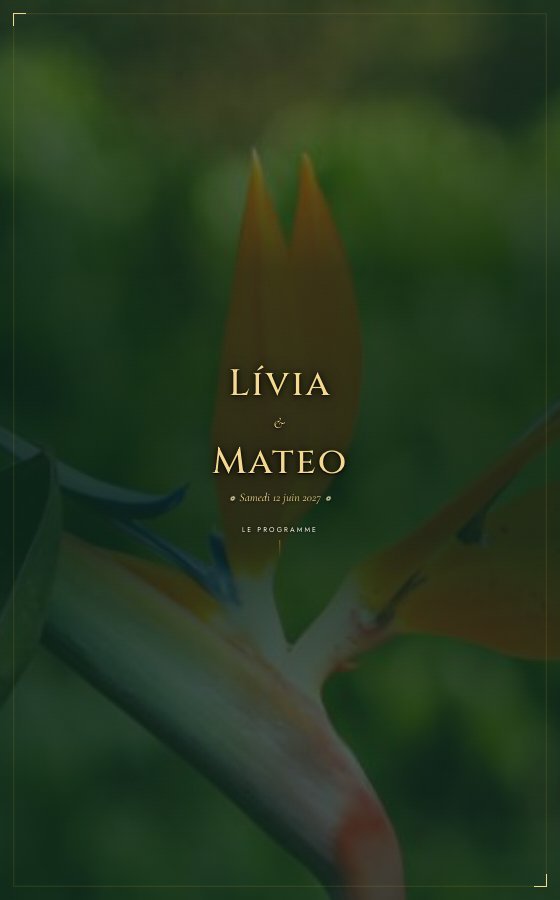
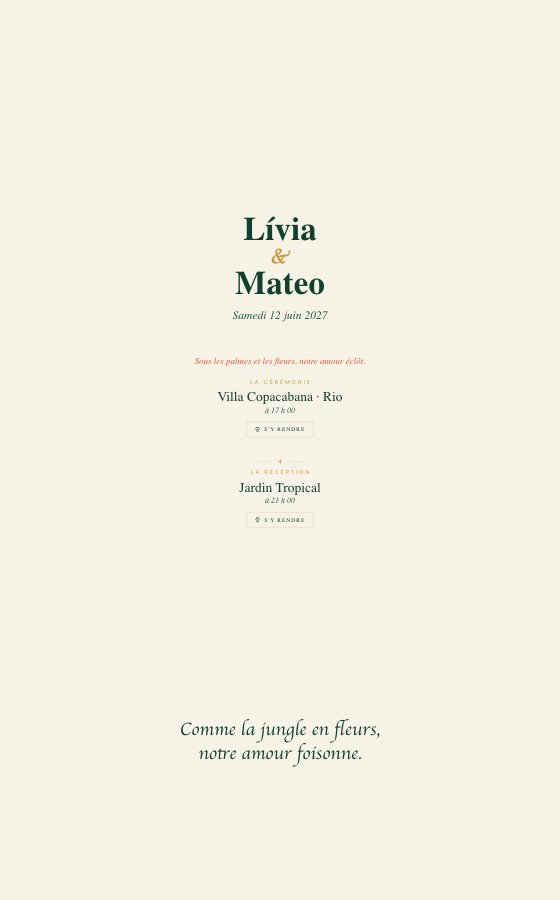
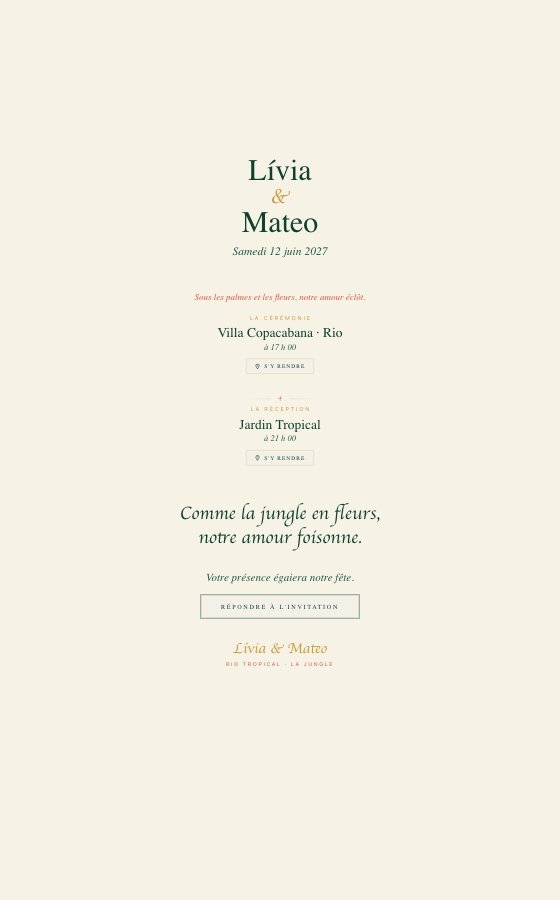
A TislitEvent invitation is a link rather than an image, so nothing is re-compressed on the way and each household opens a page addressed to them by name.
What WhatsApp does to an image, and why gold foil suffers most
Send an image the normal way and WhatsApp re-encodes it before it leaves the handset. It downscales the long edge and re-compresses to JPEG at a quality setting chosen for holiday snaps on a weak signal. The recipient never sees your file; they see the app’s version of it.
JPEG was built for continuous-tone photography, so skin, sky and soft gradients survive it well. Invitation artwork is the opposite: hairline serifs, high-contrast edges, flat fields of a single colour. Precisely what the codec handles worst.
Fine type goes furry
Compression works in blocks. At the boundary between a black letterform and a cream ground it guesses, and the guess shows as a halo of grey speckle round every stroke. On an 8pt address line, thin strokes thicken, break or partly vanish. The set of the type you paid a designer for goes first.
Foil cannot survive a flat image
Gold foil is a specular effect with no fixed colour. It shifts as the card tilts under the light, which is the whole point of it. A screen can only imitate that with a gradient, and gradients are what JPEG banding wrecks most visibly. So the sweep becomes three stepped bands of mustard, and a rose gold monogram that was exquisite in the proof arrives looking photocopied.
A PDF is worse than it sounds on a phone
A PDF keeps the resolution and the layout, and on a desktop it is perfect. On a phone, WhatsApp treats it as a document rather than as content: a grey tile with a filename on it. The guest taps, waits for a download, then lets it open in whatever viewer the handset defaults to. That is three deliberate actions before anyone has read a word.
What appears is an A5 page scaled to a portrait screen, which renders 11pt text close to unreadable. Two further faults follow. Fonts not embedded on export get substituted by some mobile viewers, so a script face becomes system sans-serif. And the file lands in Downloads, where nobody re-opens it.
A link beats both, and it is not close
A URL is a few dozen characters of text, so there is nothing in it to compress. The page then renders at the guest’s own screen resolution and reflows for a phone. WhatsApp also builds a preview card showing the couple’s names rather than a grey tile.
The bigger gain is that a page does things a picture cannot. WhatsApp is a delivery channel, not an invitation: no guest list, no reply tracking, no way to collect a dietary requirement. Sending wedding invitations by WhatsApp works properly only when the thing being sent is a page that handles all three.
- It opens in the phone browser, with no app and no account.
- It stays legible on a five-inch screen without zooming.
- It is addressed to a named household, so a reply identifies who replied.
- It takes the RSVP, headcount, dietary requirements and meal choice on one form.
- It stays correct when the ceremony time shifts, because you edit once and everyone sees it.
- It prints, for the guests who want it on the fridge.
TislitEvent builds that page at one flat price of £44.90 for unlimited guests, with RSVP tracking, dietary collection, a table plan and a digital guest book on the same list.
Three ways WhatsApp quietly loses you a guest
The group chat is the biggest mistake available
Send to individuals, or use a broadcast list, which delivers one message to many people as separate private threads. Never a group. In a group everyone sees every reply: Ruth explaining the date clash, Dan asking whether he can bring someone, and exactly who was asked in the first place.
British lists split into day guests and evening guests, and a mixed group exposes that split gracelessly. The evening tier reads forty messages about a wedding breakfast, the seated meal they are not invited to. Worse is the family group that already exists, because it reliably contains at least one person who is not on the list.
Read receipts are not RSVPs
Two blue ticks mean the message was displayed on a device. Not read, not understood, not agreed to, and certainly not a headcount. A guest reads it in a supermarket queue, means to reply that evening, and does not. In your data that guest looks identical to one who has accepted.
Receipts lie the other way too, because plenty of people switch them off. So treat delivery status as evidence the message arrived, never as evidence anyone is coming. This is the single reason wedding invitations by WhatsApp fail as a system rather than as a gesture.
A forwarded invitation has nobody’s name on it
An aunt sends it to a cousin, meaning well by it. Once the invitation is an image, nothing on it says who it belongs to, so the forwarded copy reads as an invitation to whoever is holding it. A link is not automatically immune: one generic URL with an open reply form has exactly the same fault. The defence is per-household links.
Older guests and the “I never got my invite” problem
This one causes real upset, so be blunt about it. Some guests over seventy have no WhatsApp at all. Others have it because a grandchild installed it and have not opened it since. A message to either is delivered in the technical sense and arrives nowhere, because archived and muted chats swallow it silently.
The fix is a hybrid decided household by household, not by age bracket. Print ten copies for the people who need paper. For the doubtful middle, send the link and then ring within two days: thirty seconds of “I’ve sent the details, tell me if the link won’t open” settles it.
Many older guests will ask a relative to reply on their behalf, which is fine as long as the reply is tied to their own name. And “I never got it” is sometimes true, sometimes a face-saving version of “I deleted it in October”. Paper gives you no way to tell those apart, whereas a digital send leaves a delivery record.
What do you actually write in the WhatsApp message?
The covering message is what stops a link looking like spam. Four things belong in it: the guest’s name, what the link is, where the reply happens, and the deadline. Copy these and change the names.
- Close friend, day guest. Ellie — we’re getting married on 12 June 2027 and we’d love you and Tom there for the whole day. Everything’s here, including the RSVP: [link]. Reply by 8 May? There’s a box for anything you can’t eat.
- Family, older generation. Dear Aunt Margaret, our invitation is on this link — tap it and it opens like a web page: [link]. The reply button is at the bottom. Ring me if that’s easier and I’ll put your answer in myself.
- Evening guest. Hi Sam — we’re getting married on 12 June. We’re doing a small sit-down meal, but we’d really like you at the evening reception from 7.30pm: hog roast, band, the lot. RSVP here by 8 May: [link].
- Guest with a plus one. Priya — invitation for you and Marcus: [link]. His name is on it already, so just confirm that you are both coming and add anything either of you cannot eat.
Two things to keep out of all of them. Do not apologise for not sending paper. And do not write “let me know if you can make it” as the only instruction, because that produces a reply in the chat rather than on the form.
Three more messages for the awkward cases
- Guest travelling or staying over. Hi Chris — we’re getting married in Northumberland on 12 June. Invitation, directions and the two nearby pubs with rooms are all on here: [link]. RSVP by 8 May.
- Colleague or less-close friend. Hello James — Eleanor and I are getting married on Saturday 12 June 2027 and would be delighted if you could join us. Details and the reply form: [link]. Either way by 8 May, please.
- The chaser, for a guest who has read it and not replied. Hi Rob — no pressure, but the caterers want final numbers on 22 May. Could you tap yes or no on the form when you get a minute? [link] A no is useful too.
The chaser is the message that earns its keep. Data from The Knot’s planning guidance puts the share of invited guests who accept at roughly 80%, against a separate RSVPify range of 60% to 85%. So a fifth of the list will decline, and plenty of them will decline late.
How much do wedding invitations by WhatsApp save against the post?
Royal Mail’s prices, effective 5 October 2026, settle this. A Letter must fit inside 240mm by 165mm by 5mm and weigh under 100g. An invitation with an RSVP card, a details insert and a decent envelope is thicker than 5mm, so it posts as a Large Letter instead.
| Item | Unit price | 100 households | Note |
|---|---|---|---|
| 2nd Class Large Letter, 0 to 100g | £1.55 | £155.00 | The realistic baseline. |
| 1st Class Large Letter, 0 to 100g | £3.30 | £330.00 | £3.20 each if bought online. |
| Stamped reply envelope, 2nd Class Letter | 91p | £91.00 | Only if replies come by post. |
| 2nd Class, out and back | — | £246.00 | Stamps only, nothing printed yet. |
£246 in stamps alone, then: no printing, no card stock, no envelopes, no calligrapher. According to Bridebook’s UK Wedding Report, drawn from roughly 7,000 couples, average stationery spend runs to £378. Against that sits a flat £44.90 whatever the guest count, plus a short print run for the people who need one.
The saving grows with the list. That matters most on the evening tier, where British couples ration paper invitations on cost, and at the several-hundred-guest lists that are normal at Indian weddings.
When should the message go out?
Work backwards from the catering contract rather than forwards from the engagement. The final headcount is usually due 7 to 14 days before the wedding, and some venues ask for 21 days. That date sits in the contract, not in an etiquette guide.
- Find the caterer’s final-numbers date in the contract.
- Subtract 7 to 10 days for chasing. That is the RSVP deadline.
- Subtract a further 4 to 6 weeks. That is the send date.
- Send the day list and the evening list on different days, so the two never sit in one thread.
- Chase on the form rather than in the chat, at 14 days and again at 3 days out.
One British refinement is worth building in. Give the day list an earlier deadline than the evening list, because only day guests drive the catering number. Sending wedding invitations by WhatsApp makes that split painless, since two sends cost exactly the same as one.
Frequently asked questions
Is it rude to send wedding invitations by WhatsApp?
No, provided the message is addressed to the guest by name and carries a proper invitation page behind it. Rudeness is a bulk forward with nobody’s name on it. Send individually or by broadcast list, never into a group, and print a handful for relatives who do not use a smartphone. The wording carries the formality, not the paper.
Should I send a save the date by WhatsApp too?
Yes, and it is the safest place to start, because a save the date carries no reply obligation. One rule matters more than the wording: everyone who gets a save the date must end up on the day list. Downgrading someone to the evening tier afterwards is the classic British own-goal, and no phrasing repairs it.
What about guests who reply in the chat instead of on the form?
Expect it, because roughly one guest in five will do exactly that. Answer warmly, then add the reply to the form yourself the same evening. Two records is how a headcount drifts. Where a chat reply is vague about a plus one or a dietary requirement, ask the specific question rather than guessing at it.
Do I still need printed invitations at all?
A short run of ten is sensible for grandparents, for guests with no mobile number, and for the framed copy. Beyond that, printing scales badly. The Knot’s Real Weddings Study of 10,474 couples married in 2025 puts average invitation spend at $220 and total stationery at $510.
A flat £/€44.90 for unlimited guests keeps the replies, the dietary requirements, the table plan and the guest book in one exportable list instead of 140 unread chat messages.
One payment · unlimited guests · ready in 5 minutes
Sources: Royal Mail · Bridebook · The Knot · The Knot Real Weddings Study
Read next: Adults Only Wedding Invitation Wording Without the Family Row · When to Send Save the Dates, What to Put on Them, When to Skip · The 12 Month Wedding Planning Checklist That Shows What Blocks What