
A 12 month wedding planning checklist is only worth having if it tells you what blocks what. Three dates are fixed by law: 28 days’ notice in England and Wales, banns read on 3 Sundays, and Scotland’s 29-day minimum on form M10. Almost everything else moves with a phone call.
The venue fixes the date, and the date fixes the paperwork. Capacity then caps the guest list, and the guest list sets how many invitations go out. The RSVP date decides when the table plan can be built, and the numbers given to the caterer set the final invoice.
Most checklists ignore all of that and hand you jobs sorted by month, as though booking a florist in March mattered as much as knowing what it blocks. Booking the cake late costs you a cake you liked slightly less. Giving notice late costs you the wedding.
Two bookings block everything else
The venue and the person who will legally marry you are the only things that truly have to happen in month twelve. Mood boards block nothing, and can be done in a week at any point.
Book the registrar in the same fortnight as the venue, not afterwards. At an approved venue the register office sends a registrar out, and that diary is separate from the venue’s. Popular Saturdays go first. Couples sign for dates the registrar cannot cover, and the deposit is rarely refundable.
Capacity is the other half of month twelve. A venue seating 80 for the wedding breakfast, the main seated meal whatever the time of day, has decided your day list before you write a name. Bridebook’s UK Wedding Report, based on a survey of around 7,000 couples, puts the average ceremony at roughly 74 guests, so 80 is no hardship. It is still a ceiling.
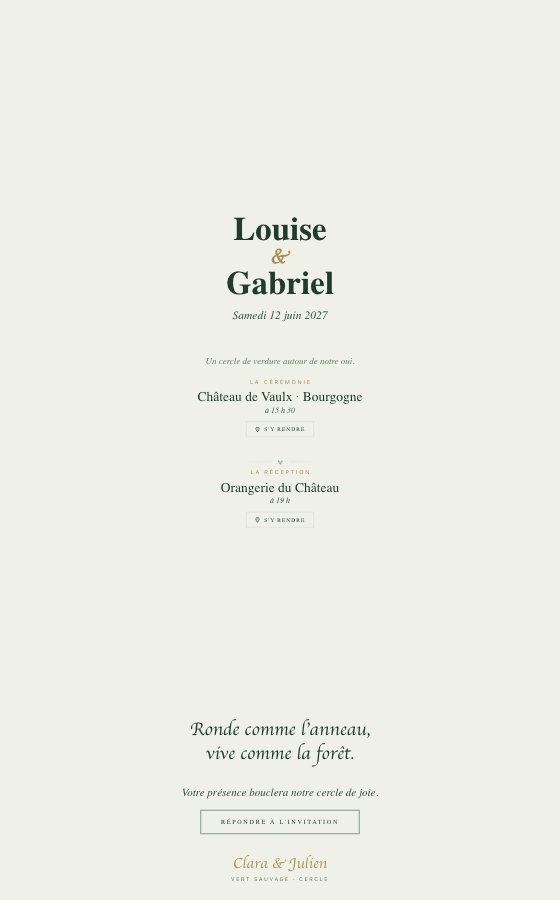
A TislitEvent invitation takes no print lead time, so the stationery stops sitting between your closed guest list and your RSVP date.
Which dates in a wedding planning checklist are set by law?
Four, and they behave differently in each part of the UK. Every other date here is negotiable.
England and Wales: 28 days’ notice
Both of you give notice in person at a register office, and the marriage cannot take place until 28 days afterwards. According to Citizens Advice, you each need 7 days’ residence in England or Wales before giving notice, and the notice then stands for 12 months. So the window opens a year out, and three to four months ahead is the sensible slot. The legal minimum is 28 days; the practical minimum is however far ahead your register office is booking appointments.
Church of England: banns at four months
Banns are arranged about 4 months ahead. According to the Church of England’s guidance, they must be read « on three Sundays during the three months before the wedding ». Here is the awkward part. Banns are read where each of you lives, plus the church you are marrying in if that is a third parish. Living apart therefore means two or three sets of readings, each with a certificate to collect. If three readings will not fit, the answer is a Common Licence.
Scotland and Northern Ireland run different clocks
Form M10, from 29 days to 3 months
Scotland runs a different legal system. Marriage notice goes on form M10 to the registrar for the district where the ceremony takes place. According to the City of Edinburgh Council, the minimum is 29 days before the ceremony and the maximum is 3 months in advance, with 6 to 8 weeks ahead recommended. Three months is advised if either of you is subject to immigration control. That window has a ceiling as well as a floor, so filing in month six gets you sent away.
Northern Ireland: ask, do not assume
Different rules again, and they are not researched here. Ask the local registrar rather than assuming the 28-day figure transfers across the Irish Sea.
The 12 month wedding planning checklist, months 12 to 6
Read the third column first.
| When | What you do | What it blocks |
|---|---|---|
| 12 months | Book the venue, and the registrar or vicar the same fortnight. | Capacity caps the guest list. No registrar, no date. |
| 11 months | Draft the guest list in two tiers, day and evening. | The day list drives every catering quote. |
| 10 months | Caterer, photographer, band or DJ. | Nothing. Book early because the good ones go. |
| 9 months | Save the dates, to the day list only. | Locks that guest into the day list for good. |
| 8 months | Order the dress. | Alterations sit behind delivery, and delivery runs 5 to 7 months. |
| 7 months | Suits, transport, cake, flowers. | Suit hire waits on final measurements, so nothing moves until 8 weeks out. |
| 6 months | Close the day list, and settle who is hosting. | List closed means quantity known, which releases the stationery. |
Why the guest list sits in the middle of everything
Two families, two sets of obligations, and at least one person who was at your parents’ wedding and has not been seen since. Budget six weeks for this, not one evening. The two-tier structure is the release valve: day guests for the ceremony and the meal, evening guests from about 7.30pm for the food and the band. Everyone resents it for a day, then forgets. What nobody forgets is a save the date sent to someone who later gets an evening invitation.
The checklist from month 5 to the morning itself
This half is driven by replies rather than bookings.
| When | What you do | What it blocks |
|---|---|---|
| 5 months | Commission the stationery. Book the hen do and stag do. | Print needs artwork, proofs and a print run. Digital needs none of it. |
| 4 months | Arrange banns with the parish, if Church of England. | Three readings must fit inside the final 3 months. |
| 3 months | Give notice at the register office. Send the invitations. | Notice blocks the ceremony. Invitations block the RSVPs. |
| 8 to 6 weeks | Scotland: lodge the M10. Evening invitations out. First RSVP chase. | The M10 window opens at 3 months and closes at 29 days. |
| 4 to 3 weeks | RSVP deadline, then a chase by telephone. | Replies block the dietary list, the table plan and the place cards. |
| 2 weeks | Final numbers to the caterer, per the contract. | That number becomes the invoice. Last free change. |
| 1 week | Table plan finalised, order of service printed, final fitting. | Nothing. This week absorbs the slippage from every week above. |
Which deadlines does a wedding planning checklist invent?
A real deadline comes from a contract, a statute or a production schedule. An invented one comes from a magazine that needed twelve headings.
Real: the 28 days’ notice. The 3 Sundays of banns. The M10’s 29-day floor and 3-month ceiling. Your caterer’s final-numbers clause, typically 7 to 14 days out and occasionally 21. A printer’s lead time, a seamstress’s slots, and the registrar’s diary.
Invented: book the florist by month nine, choose a colour scheme in month eleven, start thinking about favours. None of them block anything. Treating them as deadlines manufactures stress that displaces the real work.
The backwards calculation that sets four dates at once
The most useful sum in the process runs in reverse, from the catering contract.
- Find the final-numbers clause in the catering contract. Say it reads « final numbers are required 10 working days before the event ».
- Subtract 7 to 10 days for chasing non-repliers. That is your RSVP date, roughly 3 to 4 weeks out.
- Subtract 4 to 6 weeks of reply time. That is your send date.
- Subtract production time. Digital sends the day it is approved; print wants 3 to 6 weeks for proofs and delivery.
- What remains is the date the guest list must close. Work to it, and the arguments get a deadline instead of a mood.
What a wedding planning checklist should say about stationery
Stationery quantity follows the guest list, not the guest count. One invitation goes per household, not per head, and getting that wrong on a print order means reprinting or going short.
The money is worth seeing before the design is. Bridebook puts average UK stationery spend at £378. A suite with an RSVP card passes 5mm thick, so it posts as a Large Letter. Royal Mail prices effective 5 October 2026 charge £1.55 for a 2nd Class Large Letter, which makes 100 invitations £155 in stamps alone. Add 100 stamped reply envelopes at 91p and the postage reaches £246.
Sequencing matters as much as cost. A flat-price digital invitation such as TislitEvent removes the print lead time, so quantity no longer has to precede the final list. Replies then arrive as data rather than as cards for somebody to type up.
What actually slips, and what to do about it
The alterations queue
Dress delivery is one lead time; alterations are a second. The seamstress is also fitting every other May and September wedding in the county. Expect two or three fittings, 3 to 4 weeks apart, from 8 to 10 weeks out. Book those slots when the dress is ordered, rather than when it arrives.
August, and the other dead weeks
Suppliers go quiet in August. Small businesses take their only holiday of the year, and the ones still working are working weddings five days a week. Move any August decision point, such as proof approval, a tasting or a final balance, to July or September. The same applies at Christmas, and to register offices in early January.
The reply that never comes
Plan for chasing from the start. Roughly a fifth of a list needs a second ask, and the ones who go quiet are rarely the ones who decline. Keep the chase factual, and « we give the caterer final numbers on 3 June, so could you let us know by 27 May » needs no apology after it. A named RSVP also shows who opened the page without replying, which a paper reply card cannot, so the phone call goes to six people rather than sixty.
The six-month version
Six months is tight rather than impossible. The compression is uneven, because legal deadlines do not move at all, so what gives is supplier lead time and guest reply time. Run the same wedding planning checklist with these substitutions.
- Month 6: venue and registrar in the same week, and take the Friday or the Sunday, because midweek and off-season is where the availability is.
- Month 5: guest list closed. Not drafted, closed. Make the cut and let people be briefly annoyed.
- Month 5: skip save the dates and send the invitation. At six months the card does no work, and it creates a second chance to downgrade somebody by accident.
- Month 4: dress off the peg or the sample rail, with alterations booked the same day. Made-to-order will not arrive in time. Suits hired, not tailored.
- Month 3: give notice in England or Wales as soon as an appointment allows. In Scotland the M10 cannot be lodged earlier than 3 months out, so this is the first possible day.
- Month 2: RSVP date 4 weeks out, with one written chase and one by telephone. Shorter reply windows produce faster replies, not fewer.
- Final fortnight: final numbers, then the table plan, then the order of service, in that order, because each needs the one before it.
Keep the whole thing on one page. A planner with forty tabs is one nobody opens by March. The couples who reach the final fortnight calm are the ones who knew, all year, which four dates were real.

Frequently asked questions
When should invitations go out on a 12 month wedding planning checklist?
About 3 months before, or 10 to 12 weeks for a local wedding, with the RSVP date 3 to 4 weeks before the day. Work back from the caterer’s final-numbers clause instead of forward from the invitation, because that clause is the only fixed point. Evening invitations can follow a fortnight later, since they do not drive catering numbers.
Is 12 months long enough to plan a wedding in 2027?
Yes for most couples, and the constraint is supplier availability rather than the tasks. Peak-season Saturdays in 2027 are being booked now, and photographers and registrars go first. If the date matters more than the venue, book both in the same fortnight. If the venue matters more, be flexible about the month.
What is the first legal step, and when does it happen?
Giving notice, and in England and Wales it can be given up to 12 months before the date, with 28 days’ minimum. Church of England couples see the vicar early and arrange banns about 4 months out. In Scotland the M10 cannot be lodged more than 3 months before the ceremony, which is the one deadline that punishes early filing.
How much of a wedding planning checklist can be ignored?
Anything that blocks nothing, which is most of it. Favours, a colour scheme, welcome bags and a hashtag can all be decided in the final month or dropped entirely. Guard the four dates that carry consequences: the registrar’s diary, the notice period, the guest list closing, and the caterer’s final-numbers clause.
A flat £/€44.90 for unlimited guests keeps the RSVP, the dietary list, the table plan and the guest book on one page, which is where the last fortnight of the timeline is won.
One payment · unlimited guests · ready in 5 minutes
Sources: Royal Mail · Bridebook · Church of England · Citizens Advice
Read next: Wedding Dietary Requirements: How to Collect Them Properly and Safely · Adults Only Wedding Invitation Wording Without the Family Row · When to Send Save the Dates, What to Put on Them, When to Skip