
Almost every couple starts working out how to make a wedding guest list by opening a shared document and typing names. Two hours later there are 180 people on it, nobody will say who comes off, and the venue seats 100. Do it the other way round: the numbers first, the names second.
Your venue has already told you the maximum it seats for the wedding breakfast, which is the main meal whatever time of day it is served. Your catering contract has already told you what each of those seats costs. Those two figures decide the list, and everything after them is negotiation inside them.
What follows is the order to work in, the arithmetic that ends the arguments, the day and evening split used as a tool rather than a punishment, and a worked cut from 140 names down to 96.
Start with the two numbers your venue has already given you
Write both down before a single name goes in. The first is the seated capacity for the meal, which is not the ceremony capacity and not the standing capacity. Venues quote the optimistic version, so ask for the number with a dance floor and a cake table in place.
The second is the evening capacity, which is usually a good deal higher. Bridebook’s UK Wedding Report, drawn from around 7,000 couples, puts the average number of ceremony guests at roughly 74. If your draft sits at 160, the budget will say so long before the venue does.
Bridebook also reports that “evening guest numbers have fallen sharply” against previous years, without publishing a clean average. Treat that as a direction of travel rather than a target to hit.
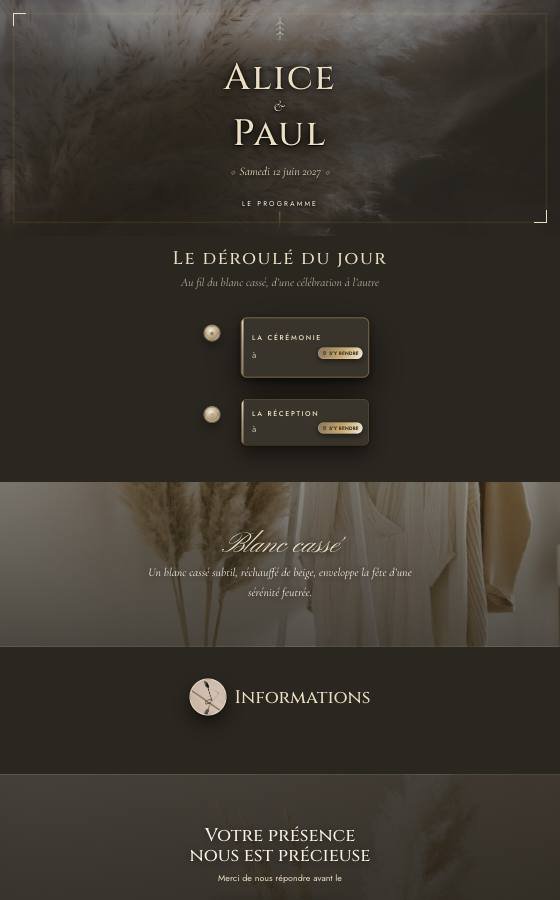
Once the numbers are settled, every TislitEvent design takes the whole list at once, so the day tier and the evening tier are set by the room rather than by the print run.
How to make a wedding guest list in the right order
Most versions of the concentric-circles method fail because people write the circles as categories — family, friends, work — and then argue about the boundaries. Write a ranked sequence instead.
- Circle one. The people whose absence would change the day: parents, siblings, and the few friends who would stand up with you. Usually 8 to 20 names across both sides.
- Circle two. Grandparents, the aunts and uncles you actually see, and the friends you ring for no particular reason.
- Circle three. Wider family you see at Christmas and funerals, university and school friends, and the partners of everyone above.
- Circle four. Colleagues, your parents’ friends, neighbours, and cousins you would not recognise in the street.
- Circle five. Anyone added because of what someone else will say if you do not. Name this circle honestly, because it is where the list goes wrong.
Draft circles one to three separately, each of you, then compare. Doing it together produces a negotiated list rather than a true one, and you need to see the gap between them. Keep every name’s circle number: in eight months, when six people have to come off, you will not remember why anyone was on there.
Circles one to three are your day guests. Circle four is the evening list and the B-list. Circle five is where the cutting starts.
How to make a wedding guest list that survives the cost argument
The argument about a particular guest is almost never about them. It is about whether they are worth the money, nobody says so out loud, and the conversation goes round twice. Put the number on the table instead.
According to Hitched, whose 2025 survey covered 2,020 couples, the average UK wedding costs £21,990 and the average guest costs £272, up 4% on £261 the previous year. Bridebook, from a different sample, reports £20,604 and roughly £278 a head. Cite one or the other, never an average of the two.
Those figures include the dress and the photographer, so they overstate what one extra person costs. The number that settles arguments is the marginal one, on page two of your catering contract: the per-head charge for the meal plus drinks.
| Day guests | At £272 a head, the Hitched average | At a £95 marginal catering rate |
|---|---|---|
| 140 | £38,080 | £13,300. |
| 96 | £26,112 | £9,120. |
| 74 | £20,128 | £7,030. |
Rebuild the third column with your own rate. Ten extra guests at an ordinary £95 a head is £950, which is a second photographer. People who argue for an hour about a cousin concede in seconds once the trade is an object they also want.
One warning: do not invite 120 for 100 seats on the assumption that a fifth will decline. The Knot’s benchmark of roughly 80% saying yes is an American planning figure rather than a UK survey, and it is unreliable on a small, family-heavy list.
Day and evening: the pressure valve, not the consolation prize
The two-tier list is the most useful structural feature of a British wedding, and the one couples feel worst about using. Day guests come to the ceremony, the drinks reception, the wedding breakfast and the speeches, then stay on. Evening guests arrive from around 7.30pm for the hog roast, the first dance and the band.
It exists because venues price per head for the seated meal, so it lets you have 150 people at the wedding while feeding 70. Everyone understands it. A few will be mildly put out for a day, and then get over it.
Use it as the release valve on circle four, and let the wording carry the difference. “Join us for an evening of celebration from 7.30pm” is an invitation to something. A day invitation with the meal quietly removed is not.
The one thing wording cannot fix is downgrading someone from day to evening after sending them a save the date. So the save-the-date list and the day list must be the same list. If you are not certain about a name in November, do not send them a card in November.
Per-guest pricing distorts the decision as well. Paper suites get rationed on cost at exactly the evening tier, which is the tier you most want to be generous with. A flat-price digital invitation such as TislitEvent’s, £/€44.90 once for unlimited guests, takes the per-name cost out of it.
Does an A-list and a B-list actually work?
Yes, but only if the second wave goes out before the first wave’s replies are common knowledge. Everybody does this, and most do it badly, which is why it has the reputation it has.
Invitations for a UK wedding go out six to eight weeks ahead, so for a June 2027 date that means April. Send the A-list at ten to twelve weeks, set an internal deadline four weeks later, then send the B-list at six. From the recipient’s side, an invitation six weeks before a wedding is simply an invitation.
- Rank the B-list before you send anything, so that nobody is chosen in a hurry.
- Replace like for like: a declining couple frees two seats, not one.
- Never mention the A-list and B-list to a bridesmaid, a group chat or your mother. That is how it leaks.
- Stop at six weeks out, and move the remaining names to the evening list instead.
Set the reply-by date by working backwards from the catering contract, not forwards from the invitation. Most venues want final numbers 7 to 14 days out, some as much as 21, and the contract says which. Subtract a week to ten days for chasing, which usually lands three to four weeks before the wedding.
How to make a wedding guest list when someone else is paying
If a parent is contributing, they get names. Pretending otherwise does more damage than the guests ever will. What you control is the number, and it is agreed before anyone starts writing.
Give each contributing set of parents a fixed allocation, and hand the decision over with it: “you have twelve, and they can be anyone you like”. Arguing about one specific friend of your mother’s is unwinnable and permanently remembered. Handing her a number is neither of those things.
Give them an evening allocation as well, which absorbs most of the remaining pressure. Where the contributions are uneven, keep the allocations even anyway. Guest counts are read as status, and the money is not.
Which arguments will you actually have?
Plus-ones
A plus-one goes to anyone married, engaged, cohabiting or in an established relationship; to the wedding party; and to anyone who will know nobody else there. Being single is not a qualifying condition. Name the partner where you know it, so « Ms Ana Lopez » rather than « and Guest ». Named, per-guest invitations also prevent the worst reply outcome: two people arriving where you counted one.
Colleagues
Pick a line and hold it: nobody, the immediate team, or people you would still see socially if you both left tomorrow. The third is usually right and is easy to defend, because it is about friendship rather than the org chart. Never invite four from a team of six.
Children
Three rules work: all children, no children, or family children only, meaning nieces, nephews and your own. Anything more bespoke cannot be explained to an excluded parent without insulting them. Children take a full seat, and most venues charge a reduced but real per-head rate, so count them in from the start.
Ex-partners, distant guests and other edge cases
Ex-partners in a shared friendship group. Invite the person if they are your friend independently of the relationship. Tell the other party before the invitation lands, not to ask permission but so that it is not a surprise. Then seat them at different tables and stop thinking about it. The couples who handle this worst invite neither, and lose two friends to avoid one awkward conversation.
Guests abroad who will not come but must be asked. Ask them. An invitation to someone in Auckland is a courtesy, and they know it. Send it early so that it does not read as an afterthought, count them at full weight until they decline, and give them a way to send a message rather than only a yes or a no.
People who invited you to theirs. An invitation is not a debt. A wedding of 96 seats cannot repay a wedding of 200, and nobody keeps a ledger for longer than a fortnight.
Worked example: 140 down to 96
This is how to make a wedding guest list fit a fixed room. The venue seats 96 for the wedding breakfast and holds 170 in the evening, on a contract at £95 a head. The merged draft ran to 140 day guests and 40 evening.
| Decision | Day change | Moved to evening | Running day total |
|---|---|---|---|
| Merged draft list | None | None | 140. |
| Plus-ones withdrawn from nine guests not in established relationships | Minus 9 | 0 | 131. |
| Colleagues cut from eleven to four | Minus 7 | 7 | 124. |
| Children limited to family only, five of nine removed | Minus 5 | 0 | 119. |
| Parents’ allocations fixed at ten each, from a combined eighteen | Minus 8 | 6 | 111. |
| Second cousins and parents’ cousins moved to the evening | Minus 8 | 8 | 103. |
| University friends not seen in five years moved to the evening | Minus 7 | 7 | 96. |
Day list 96, exactly the room. Evening list 68, inside 170. Catering saved 44 covers at £95, which is £4,180 and paid for the band. Four of those six decisions were rules rather than judgements about individuals, which is why it took an evening rather than three months.
Six friends living abroad stayed on the day list at full weight. Four declined in February, and those seats went to the ranked B-list at six weeks out, replaced as couples rather than as individuals.

Frequently asked questions
How many guests should a wedding have?
The room and the contract decide that, not a benchmark. Bridebook’s report on around 7,000 UK couples puts the average ceremony at roughly 74 guests, and Hitched puts the average cost per guest at £272. Multiply your draft list by your own per-head rate before you look at anyone else’s average, because that number is the one you will pay.
How do you cut a wedding guest list without falling out?
Cut by rule, not by name. Withdraw unattached plus-ones, cap children, cap colleagues, and give each set of parents a fixed allocation. A rule applies to a category and cannot be read as a verdict on one person. Move the cut names to the evening list where the room allows, and do the whole thing in one sitting.
Is it rude to invite someone to the evening only?
Not in Britain, where the custom is universal and understood. It turns rude in three situations: when an obvious peer got the day, when their partner got the day, and when they had already received a save the date. Treat whole groups the same way. Nobody compares their invitation with a stranger’s, only with their cousin’s.
When should the guest list be finished?
Before the save the dates go out, six to nine months ahead, because that list reads as a promise of the whole day. The day tier should be settled by then. The evening tier can still move until the invitations are sent, six to eight weeks before the wedding, and a ranked B-list absorbs declines until six weeks out.
A flat £/€44.90 covers unlimited guests, with RSVP, dietary requirements, table plan and guest book included, so no name on your list carries a per-head cost.
One payment · unlimited guests · ready in 5 minutes
Sources: Hitched · Bridebook · The Knot · Wikipedia
Read next: Digital Wedding Invitations vs Paper: The Honest UK Comparison · Evening Wedding Invitation Wording: Examples, Timing and Costs · Wedding Invitation Wording: 15 Examples for Every Family Situation