The first claim anybody makes about digital wedding invitations is that they save money. True, and the least interesting thing about them. One flat fee against £246 of Royal Mail postage settles that argument in four seconds. Then come the questions that actually matter: what the invitation has to do, who it is going to, and what you need back before the caterer’s deadline.
Two decades in stationery, most of them spent specifying paper stocks and talking couples down from envelope-liner decisions, have left me with a position that pleases nobody. Paper is not finished. Digital is not a compromise. They are two different tools sharing a name: one is an object, the other is a system.
Confusing the two is how a couple spends a four-figure sum on letterpress and still does not know, three weeks out, how many vegetarians are coming. What follows is the honest version, including the cases where a link is the wrong answer.
What paper does better, and it is not just sentiment
Start with the object. A printed invitation arrives uninvited into somebody’s hallway. It has weight. It is slightly awkward to hold. It goes on the mantelpiece, or onto the fridge under a magnet, and for four months it quietly reminds a household that something is happening in June.
Nothing on a screen does that. A digital card is opened once, admired for eleven seconds, then pushed down the notification stack by a group chat about parking.
The envelope is a signal
Formality is communicated before anyone reads a word. A heavy uncoated envelope, hand-addressed, with a real stamp, says: seated dinner, speeches, dress properly. Guests calibrate their outfits from that first touch. A well-designed web page can carry elegance and restraint, but it cannot carry weight, and weight is half the message at a formal wedding.
The keepsake, which couples underestimate
Ask anyone married twenty years what they kept. The invitation is usually in the box, next to the order of service and a pressed flower gone brown. Mothers frame them. A screenshot does not do that job. If you already know you want something framed above the stairs in ten years, print at least one copy for yourselves.
Guests who are not comfortable online
An eighty-three-year-old great-aunt who shares an email address with her son is not a design problem to be solved. She is a person you love. Sending her a link asks her to perform a small technical task in order to be welcome. Post her a card.
Work out the proportion before you choose. Count the households that would need help opening a link, and set it against your total. Under one in ten and a link is fine for the rest. Above one in five and you are designing an invitation that excludes a fifth of the people you want there, which is a poor trade for a saving of a few pounds a head.
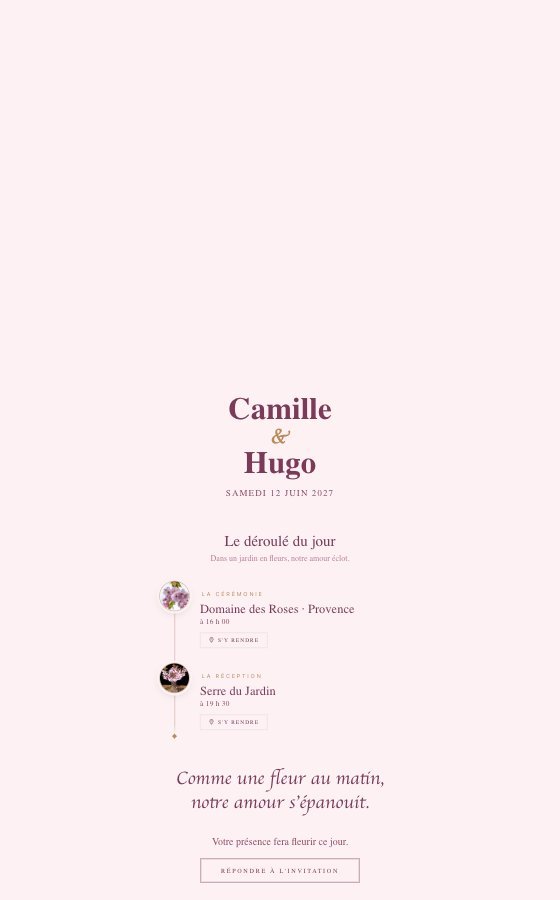
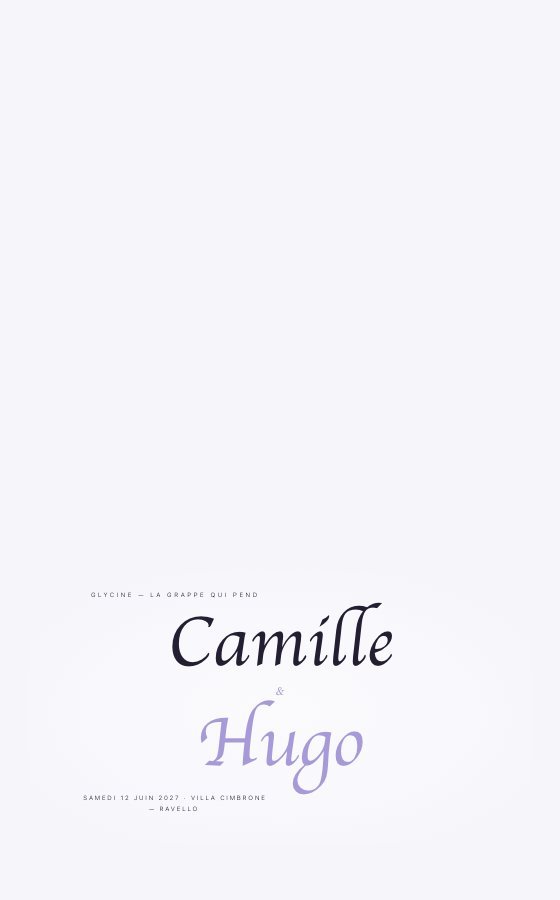
If you are weighing the two, it helps to see what a well-made digital suite actually looks like.
What do digital wedding invitations do better?
Everything that involves information moving.
Replies stop being your unpaid second job
A paper RSVP is a postal round trip, a spreadsheet kept by hand, and roughly thirty telephone calls made by your mother in April. Some never come back. Some come back with no name on them. A digital reply lands attached to the guest it came from, timestamped and already counted.
The chasing changes too. Digital wedding invitations tell you who opened the page and still did not answer, which is precisely the list you need. Paper tells you nothing at all.
It also makes the reminder easier to write, because you can name a real deadline instead of nagging. Something like: The venue needs our final numbers on Friday, so could you let us know either way before then? That works far better than a second reminder about manners, and it works because it is true.
Corrections after sending
This is the single most underrated advantage. Print a wrong start time on 120 cards and you have a crisis: reprint, repost, or send an apologetic correction card. Change the venue three weeks out because the marquee supplier folded, and paper cannot help you. A digital page is edited once and everybody sees the current version.
Guests abroad and households in two languages
International post is slow, costly and occasionally fictional. A card to Australia can take three weeks. In a bilingual family, a multilingual invitation lets each guest read in their own language without printing three versions. Platforms built for this, TislitEvent among them, serve one link in several languages.
What do digital wedding invitations cost against print?
The comparison only works if you count the whole job, not the card.
Royal Mail’s Letter format stops at 240mm by 165mm by 5mm and 100g. Almost any suite with a reply card and an insert clears 5mm, so it posts as a Large Letter. At the rates in force from 5 October 2026 that is £1.55 second class, against 91p for a Letter.
So a hundred invitations cost £155 to post. Add a stamped reply envelope at 91p and you reach £246 in stamps, before card, ink or envelopes. Bridebook’s UK Wedding Report puts average stationery spend at £378 in total, which shows how much of the budget is simply carriage.
The American picture is the same shape. The Knot’s study of 10,474 couples puts invitations at $220 and total stationery at $510, while Greenvelope reports printed suites for around 100 guests at $400 to $650. Digital wedding invitations replace the whole carriage line with a single fee, and TislitEvent charges 44.90 euros however long the list runs.
Paper against digital, line by line
| Factor. | Paper. | Digital. |
|---|---|---|
| Cost. | Scales with the guest count, every time you add a name. | Flat. One fee covers the whole list. |
| Lead time. | Weeks. Proofs, print, delivery, addressing, posting. | Hours. Same-evening sending is realistic. |
| Reply handling. | Manual. Cards, a spreadsheet, chasing calls. | Automatic and attributed. Counts update themselves. |
| Corrections. | Reprint and repost, or issue a correction card. | Edit once. Every guest sees the new version. |
| Guests abroad. | Slow, costly, sometimes unreliable. | Instant, and readable in the guest’s language. |
| Late additions. | Awkward. Either you kept spares or you did not. | Add a name, send the link. |
| Keepsake value. | High. Frameable and it survives house moves. | Low on its own. A link is not an heirloom. |
| Formality signal. | Strong, immediate, physical. | Depends on design quality alone. |
How do digital wedding invitations handle the evening tier?
Better than paper, and this is the British case nobody writes about. Day guests get the ceremony, the drinks reception, the wedding breakfast, meaning the seated meal whatever the hour, and the speeches. Evening guests arrive from about 7.30pm for the food, the first dance and the band.
Venues charge per head for the seated meal, so a two-tier list lets a couple invite 150 people and feed 70. The evening tier is exactly where couples ration paper on cost, because a second print run for eighty people is a real sum.
A flat fee removes that pressure entirely. The evening card can be as handsome as the day one, and it carries different wording: Eleanor and Thomas invite you to join them for an evening of celebration from 7.30pm at Hazelwood Barn. It must not repeat the ceremony details, or somebody will arrive at eleven in the morning.
In Ireland the same tier is called the afters, and the etiquette is touchier. Send both tiers on the same day either way.
Dietary requirements, seating and the caterer
Collecting allergies on paper means a tick box, a legibility problem, and a transcription error that puts shellfish in front of somebody who cannot eat it. Free text is the enemy here. A card returned reading no nuts pls x is not information a chef can cook from.
Collected digitally, the same answers arrive typed, structured and exportable. Separate the allergy from the preference, because a caterer treats them differently. Offer the meal choice as a field rather than a sentence.
Timing matters as much as format. Most caterers want final numbers 7 to 14 days before the wedding, and some venues ask for 21, so set the reply-by date 3 to 4 weeks out. That leaves a fortnight to chase, which you will need.
The two tiers need different clocks here as well. Only the day list drives the seated-meal count, so that is the tier with the hard deadline. The evening tier can reply later, because a hog roast or a buffet flexes in a way that eighty plated dinners do not. Paper cannot easily run two deadlines. A page with two guest groups can.
When are digital wedding invitations the wrong choice?
More often than the marketing suggests. Be honest about the following.
- A genuinely formal wedding. Black tie, a cathedral, three hundred guests, a receiving line. The convention exists for a reason.
- A list weighted towards people over seventy-five. If a third of your guests need a relative to open the link, the format is working against you.
- Families where the card is part of the ritual. In some households it is shown to neighbours and kept on display.
- Couples who want stationery as a design project. If the joy is in the stock, the ink and the wax seal, a link will feel thin.
- Anyone whose parents are paying and object. Not a design argument. Decisive all the same.
One further warning. Digital only works if you use the tools it gives you. A couple who sends a link and then tracks replies in a notebook has taken every disadvantage and none of the benefits.
The hybrid approach, which suits most couples
Here is the arrangement that has aged best. Print a short run, twenty to thirty cards, for parents, grandparents, the wedding party, and anyone whose reaction to a link would be a telephone call to your mother. Send digital wedding invitations to everybody else.
The economics are pleasant. Short runs carry a high unit cost but a low total cost, so twenty good cards often cost less than a hundred mediocre ones. You keep the mantelpiece object where it matters and the reply tracking for the bulk of the list.
Make the two versions agree. Same typeface, same colours, same wording, same tone. Send them on the same day, so nobody compares postmarks and draws conclusions. Keep two spare printed cards: one for the album, one for whichever relative is quietly offended.
How to decide in ten minutes
- Write down the guest count, and how many of those guests live outside the country.
- Count how many would struggle with a link. More than one in six, and you go hybrid.
- Decide how formal the day genuinely is, not how formal you would like it to sound.
- Ask who is doing the chasing. If that is you, and you work full time, weight the decision towards digital.
- Ask whether the venue, date or timing could still change. If yes, do not print yet.
- Decide whether you want a keepsake. If so, order one printed card regardless.

Frequently asked questions
Are digital wedding invitations considered rude?
Not any more, and the objection is usually about design rather than format. A badly made link feels casual; a well-made invitation page does not. The remaining exception is the properly formal wedding, where a heavy envelope still carries information that a screen cannot. For everything else, the format stopped being a statement several years ago.
How do you send digital wedding invitations to older guests?
Post those ones. Twenty printed cards cover the grandparents, the great-aunts and anyone who would ring your mother about a link, and a short run costs little against Bridebook’s £378 stationery average. Send the digital version to everyone else on the same day. Nobody compares, and the awkward conversation never happens.
Can you collect dietary requirements without a reply card?
Yes, and more accurately. Put the allergy question, the preference question and the meal choice on the same page as the reply, so the answers arrive attached to a named guest. Export the list for the caterer at the reply-by date, three to four weeks before the wedding, and keep a fortnight in hand to chase whoever has not answered.
What happens if the wedding date changes after sending?
You edit the page once and every guest sees the new version, which is the advantage paper can never match. Send a short message alongside the change, because an edited page does not announce itself. Couples who married in 2020 learned this expensively, and a good many of them will not go back to print for the main list.
Twelve collections, one flat price, replies and dietary requirements included.
One payment · unlimited guests · ready in 5 minutes
Sources: Royal Mail · Bridebook · The Knot · The Knot Real Weddings Study
Read next: When to Send Wedding Invitations: The Timeline That Actually Works · How Much Do Wedding Invitations Cost? Real UK Prices and Postage