The first invoice I wrote by hand was for 120 engraved invitations on 600gsm cotton board. The father of the bride read the total twice before he spoke. Two decades on, the pause is unchanged, and so is the question that follows it: how much do wedding invitations cost, once everything is added up?
Stationery is priced like a small print job rather than a shop item, and that single fact explains most of the confusion. A print job carries a setup cost that exists whether you order 40 pieces or 400. On top of that sit a running cost per sheet and a finishing cost. Then comes a second budget nobody mentions in the showroom: getting the things into your guests’ hands.
What follows are ranges quoted and paid across the UK, Ireland and the United States, set against published survey figures where those exist. They are ranges, not prices, and paper mill increases move them every year.
How much do wedding invitations cost per card?
Ask ten couples and the answers spread across a factor of thirty. Print method explains most of that. Per invitation card, ordered at around 60 to 80 pieces, these are the ranges I see most often:
- Print-at-home template: £15 to £40 for the file, plus card and ink.
- High-street or supermarket ranges: 80p to £2.20 a card.
- Digital or flat litho on 300 to 350gsm stock: £1.60 to £4.
- Foil or letterpress, one colour, one side: £4.50 to £9.
- Engraving, thermography or multi-plate letterpress: £8 to £20.
- Bespoke artwork fee, charged once, where an illustrator draws from scratch: £350 to £1,500.
Ask for the quote in one line and you will get a comparable answer from every studio. Word it like this: Please quote 65 invitation suites, 65 details cards, 65 reply cards and lined envelopes, and give the assembled weight in grams. The weight is the part that decides your postage band, so it belongs in the quote.
Those figures cover the invitation card alone. A full suite, meaning invitation plus details card plus RSVP card plus envelopes, usually lands between 2.2 and 3 times that. Hence the commonest surprise in the trade: the mental picture was one card, the quote was five pieces.
For a reference point on the digital side: one flat fee of 44.90 euros, whatever the guest count.
Why is 100 invitations not twice the price of 50?
You ask for 50, your mother adds her cousins, and you assume doubling the order doubles the bill. It does not.
Every printed job carries a fixed setup. On letterpress or foil that means a photopolymer plate or a magnesium die, roughly £45 to £95 per colour, per design. A die-cut shape needs a cutting forme, for similar money. Digital presses need artwork prepped, proofed and colour matched. None of that changes when the guest list grows.
Work it through on a foil invitation with a £70 die and a running cost of £1.90 a card.
- 50 cards: 70 plus 95 gives £165, which is £3.30 each.
- 100 cards: 70 plus 190 gives £260, which is £2.60 each.
- 150 cards: 70 plus 285 gives £355, which is £2.37 each.
So doubling the quantity added 58 per cent to the bill, not 100. Hence the advice I give every couple: order 10 to 15 per cent more than the list. Twelve extra cards on the original run might cost £25. Coming back six weeks later for those same twelve pays the setup again, usually £120 to £200, on a paper batch that may not match.
What do the published averages actually say?
Trade ranges are useful, but sourced averages keep you honest. Three surveys are worth quoting, and they measure different things.
| Figure. | Value. | Source. |
|---|---|---|
| Average UK stationery spend. | £378. | Bridebook UK Wedding Report. |
| Average UK wedding, all in. | £21,990. | Hitched, 2,020 couples. |
| Average UK cost per guest. | £272, up 4 per cent. | Hitched. |
| Average ceremony guest count. | About 74. | Bridebook. |
| US spend on invitations. | $220. | The Knot, 10,474 couples. |
| US total stationery spend. | $510. | The Knot. |
| US printed suites, about 100 guests. | $400 to $650. | Greenvelope. |
Read the £378 figure carefully. It covers all stationery, including save the dates, orders of service, menus and table plans, so the invitation itself is perhaps half of it. The Knot’s study splits its own total the same way, putting save the dates at $150 and day-of paper at another $150.
The costs nobody puts on the first quote
Design and print are the visible half. Here is the half that ambushes people.
Wax seals
Lovely, and expensive twice over. The seals themselves run 45p to £1.20 each. Then the lump of wax makes the envelope rigid and uneven, so it can no longer be machine-sorted and every one moves up a tier. Couples budget for the seals and never for the surcharge.
RSVP cards and their return postage
An RSVP card is two costs, not one: the card with its small envelope, and the stamp you put on it so guests actually reply. Sixty-five return stamps run £59 at second class, and a good number are never used, because guests text you instead.
Taking the reply online deletes all three costs at once. The line on the card then reads: Please reply by 12 May 2027 using the link above, where you can also tell us about any dietary requirements. One sentence, one insert fewer, and the answers arrive already attached to a name.
Calligraphy and addressing
Hand-addressed outer envelopes are the loveliest thing in the trade and priced accordingly, at £2.20 to £5 each, more for gold ink on dark stock. Printed addressing costs 40p to £1.20. Writing them yourself costs three evenings and a sore wrist.
Reprints for mistakes
The most avoidable line in the budget. A misspelled surname, a wrong postcode, a ceremony time that moved after sign-off. Once a job is printed, a correction is a new job, with new setup, a new minimum and often a rush charge of 20 to 35 per cent. Budget 5 to 10 per cent of the print total as contingency.
What does posting them actually add?
More than most couples expect, and the figures are public.
Royal Mail’s Letter format stops at 240mm by 165mm by 5mm, up to 100g. Almost any suite with an RSVP card and an insert clears 5mm, so it posts as a Large Letter. At the rates in force from 5 October 2026 that is £1.55 second class, against 91p for a Letter.
So posting 100 invitations second class as Large Letters costs £155 in stamps alone. Add a stamped reply envelope at 91p a head and you reach £246 of postage, before card, ink or envelopes. Against Bridebook’s £378 stationery average, postage can be two thirds of the whole budget.
The American picture differs in shape rather than in kind. A Forever stamp is $0.82 at the counter, a postcard from $0.65, and a large or square envelope from $1.31, with square envelopes classed as non-machinable and surcharged on top.
How much do wedding invitations cost for 100 guests?
One correction first: a hundred guests is not a hundred invitations. Couples and families share an envelope, so the list usually comes to 60 to 70 suites. The table below assumes 65 and spans a careful budget job to a fully embellished one.
| Line item, 65 suites. | Budget end. | Premium end. |
|---|---|---|
| Design or artwork. | £0. | £450. |
| Invitation cards. | £95. | £650. |
| Details card. | £45. | £220. |
| RSVP card and envelope. | £40. | £180. |
| Outer envelopes and liners. | £25. | £130. |
| Guest addressing. | £0. | £325. |
| Wax seals, ribbon, vellum. | £0. | £195. |
| Outbound postage. | £59. | £215. |
| Return postage. | £59. | £117. |
| Reprint contingency. | £25. | £150. |
| Total. | £348. | £2,632. |
Two lines in that table deserve a second look. Guest addressing swings from nothing to £325, and it is pure labour, so it is the first thing to cut when the total frightens you. Design swings from nothing to £450 depending on whether you buy a collection or commission artwork. Between them they account for well over a quarter of the premium column.
Most jobs I have quoted at that size settle between £700 and £1,300. Postage in both directions accounts for £118 to £332 of it, before a single guest has replied. That is the line couples query every time, and it is the line they cannot negotiate.
What drives the price up, in order
- Print method. Digital flat printing against letterpress is a three to five times multiplier, because letterpress is slow, hand-fed and plated per colour.
- Number of colours. Each ink or foil colour on a plated press means another plate, another setup and another pass.
- Piece count in the suite. Every extra card carries its own run, its own cutting and its own weight in the envelope.
- Format and size. Square cards, and anything larger than A5, waste sheet area, need bespoke envelopes and post at a higher tier. Square can add 30 per cent without looking any richer.
- Evening guests. A British two-tier list adds a second, cheaper card, and couples routinely forget to quote for it.
How much do wedding invitations cost if you send them digitally?
The digital side has its own pricing logic, and there are three shapes of it.
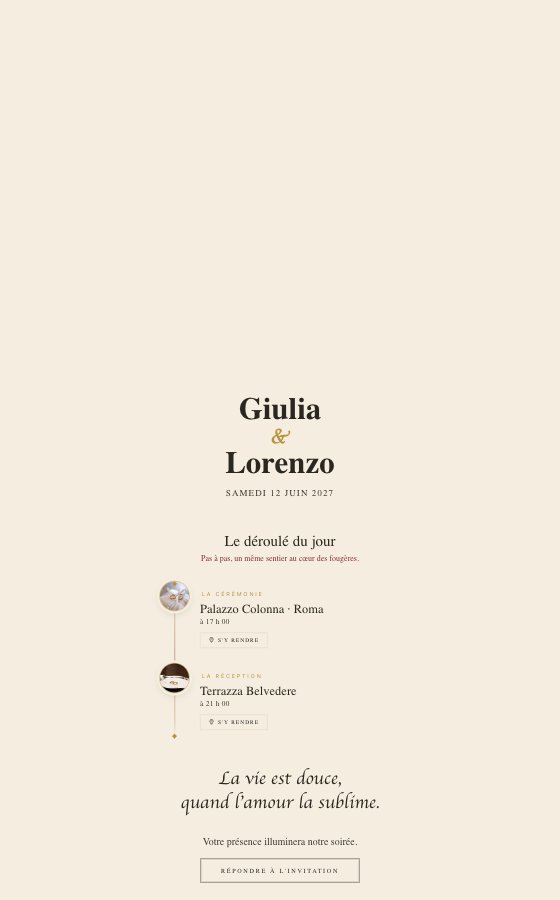
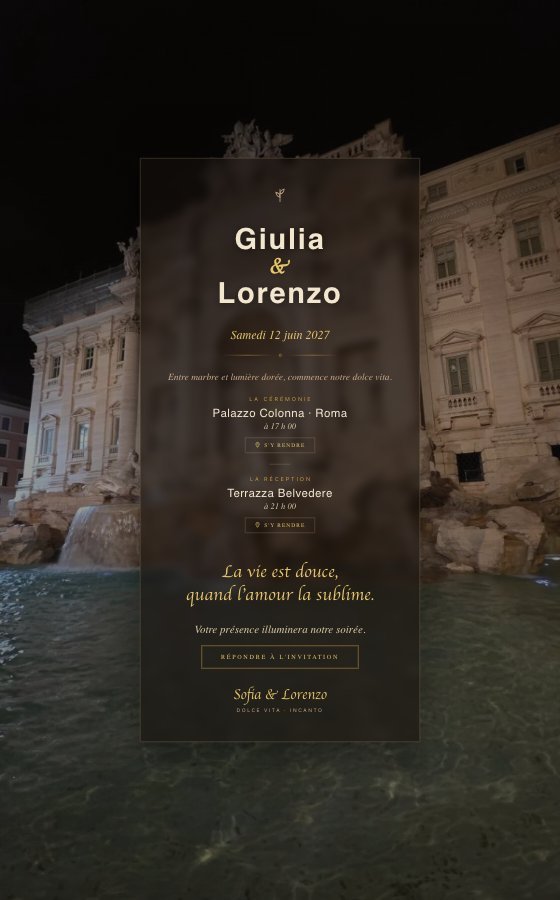
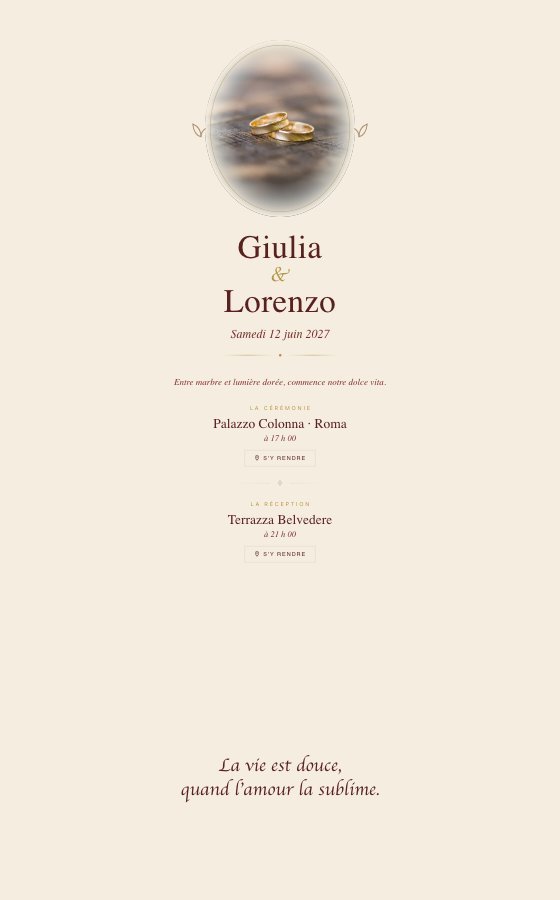
Free social tools cost nothing and look it. Template marketplaces sell a design file for £12 to £35. Platforms usually price per guest, commonly 25p to 90p a head. That behaves exactly like a print run and punishes a long list. Others price by tier, with RSVP tracking and dietary collection held behind the upper plans. TislitEvent uses a third shape: one flat fee of 44.90 euros for the whole wedding, whatever the guest count.
The useful comparison is not the headline figure but the lines that vanish from the budget table: outbound postage, return postage, envelopes, liners, assembly and the reprint contingency. A misspelled surname is corrected in thirty seconds rather than repurchased.
What digital does not replace is the object. Many couples print twenty cards for the people who will keep them and send the rest as links, which usually halves the total.
Bringing the figure down without it looking cut
- Lose a card, not the quality. Put the details on the reverse of the invitation. One fewer piece saves print, weight and postage at once.
- Stay inside the Letter band. Under 5mm and 100g is 91p instead of £1.55, which is £64 across 100 envelopes.
- Take replies online. That deletes the RSVP card, its envelope and 65 return stamps, and produces a list you can sort.
- One foil colour, used well. A single colour on excellent stock reads richer than three on thin card.
- Order the overs up front. Ten to fifteen per cent spare on the first run is the cheapest insurance in the trade.
- Hand-deliver locally. Twenty dropped through doors is twenty stamps saved.
The figure you pay depends less on taste than on three early decisions: how many pieces go in the envelope, how thick it is, and whether the reply comes back by post. Get those right and a beautiful suite for a hundred guests sits under a thousand pounds.
Frequently asked questions
How much do wedding invitations cost on average in the UK?
Bridebook’s UK Wedding Report puts average stationery spend at £378, which covers invitations, save the dates, orders of service and day-of paper together. The invitation suite itself is usually about half of that, so £150 to £200 for a modest printed job at around 65 suites. Anything foiled or hand-addressed climbs past it quickly, and postage is extra.
Is it cheaper to print invitations yourself?
On paper, yes. A template costs £15 to £40 and blank card is inexpensive. In practice, home printers handle 350gsm badly, colour drifts between batches, and guillotine edges show. Reckon on wasting one sheet in six. It works well for a short run of 30, and it stops being a saving once you are trimming 200 pieces on a kitchen table.
Why is the RSVP card so expensive for what it is?
Because it is three costs disguised as one: a small card, a small envelope, and the second-class stamp you put on it, at 91p each. Across 65 suites that is £59 of return postage on top of the printing, and a fair share of those stamps never get used because guests text their answer instead.
Do evening guests need a separate, cheaper card?
They need a separate card, and it can certainly be cheaper. The evening invitation carries the arrival time and the evening food, and leaves the ceremony and the wedding breakfast off. Printing it on the same stock in one run keeps the setup cost shared, so the extra tier usually adds a per-card running cost and nothing more.
No stamps, no reprints, no second run when the list grows. One price, twelve collections.
One payment · unlimited guests · ready in 5 minutes
Sources: Royal Mail · Hitched · Bridebook · The Knot
Read next: When to Send Wedding Invitations: The Timeline That Actually Works