
Couples nearly all err in the same direction: too late, then a fortnight of ringing round for answers. The working answer on when to send wedding invitations is 8 weeks before a wedding close to home, and 12 weeks when guests have to get on a plane. Those two numbers have held steady for twenty years.
Eight weeks is long enough for a guest to book a hotel, arrange childcare and swap a shift. It is short enough that the card stays on the fridge rather than vanishing into a drawer. Send fourteen weeks out for a local wedding and half the list forgets. That is not a theory. That is the phone calls a stationer fields every June.
What follows is the timeline as it actually runs. Production lead times, Royal Mail weight bands, the caterer’s cut-off, the evening-guest tier, and the legal notice periods that sit quietly underneath the lot.
The short answer on when to send wedding invitations
Eight weeks at home. Twelve weeks for a destination wedding. Nearly every other stationery decision hangs off those two anchors.
Push the domestic figure to 10 weeks when the date falls on a bank holiday weekend, in school half-term, or in peak season between mid-June and early September. Rooms within a sensible drive of a popular venue go early. So an extra fortnight of notice buys a better acceptance rate, and it costs you nothing.
There is a ceiling in the other direction. Beyond roughly four months, an invitation reads as information rather than as a request for an answer. In practice you will then chase harder than a couple who sent at eight weeks.
Production time comes before the send date
The send date is not the order date. If you are printing, build in the studio’s clock first:
- Design and proofing: 1 to 2 weeks, longer when three relatives have opinions about the wording.
- Digital or flat litho printing: 5 to 10 working days.
- Foil, letterpress or engraving: 3 to 4 weeks, because the plates and dies are made first.
- Calligraphy addressing: 2 to 3 weeks for 80 envelopes, and longer if you ask in May.
- Assembly, stuffing and stamping: a full weekend for 100 suites with inserts.
Add it up. A letterpress suite with hand-addressed envelopes wants ordering about four months out. A digitally printed card, by contrast, can be ordered ten weeks out and still make the post comfortably.
Once the send date is fixed, the card still has to exist. A digital suite can be built and sent the same evening.
How far ahead should save the dates go?
Six to eight months for a wedding at home, and 9 to 12 months for anything needing a flight or a passport. Annual leave for the following summer is usually claimed in January, which is the real reason the early date matters.
Two rules save trouble later. First, only send a save the date to somebody who is certainly getting an invitation, because there is no graceful way to retract one. Second, send them once the venue is contractually confirmed and the deposit has cleared. A provisional hold is not a date.
The save-the-date list and the day-guest list must match exactly. Sending a save the date and later moving that household to the evening tier is the classic British own-goal, and no wording repairs it. Where the engagement runs shorter than six months, skip the save the date entirely and go straight to the invitation.
Keep the card itself short. Names, date, place, and a line promising the rest. For example: Eleanor and Thomas are marrying on Saturday 12 June 2027 at Hazelwood Barn. Invitation to follow. Anything more and guests treat it as the invitation, then wonder why no reply card arrived.
A working timeline for when to send wedding invitations
Different weddings run to different clocks. This is the grid I have used with couples for years, and it survives contact with real venues.
| Type of wedding. | Save the date. | Invitation posted. | Reply-by date. |
|---|---|---|---|
| Local, guests within two hours. | 6 to 8 months. | 8 weeks. | 3 to 4 weeks. |
| Peak season or bank holiday. | 8 to 10 months. | 10 weeks. | 4 weeks. |
| Destination or largely international. | 9 to 12 months. | 12 weeks. | 6 to 8 weeks. |
| Short engagement, under 4 months. | Skip it. | 5 weeks, minimum. | 2 to 3 weeks. |
| Evening tier on a two-tier list. | Not usually. | Same day as the day tier. | 3 weeks. |
One line nobody prints on a timeline. Everybody has a B-list, and nobody admits to it. If you are running one, post the first wave at ten weeks with an internal reply date at six weeks, so the second wave still lands six weeks out. Later than that and it shows.
Why does the reply-by date belong to the caterer?
Because the contract says so, and taste does not enter into it. Every argument about when to send wedding invitations eventually collapses into this single date.
Most caterers want final numbers 7 to 14 days before the wedding, and some venues ask for 21. That figure sits in the contract you have already signed, so read it before you print anything. Then set the reply-by date 3 to 4 weeks before the day, which leaves you a fortnight to chase.
Work backwards, never forwards. Caterer deadline, minus 7 to 10 days of chasing, gives the reply-by date; minus another 4 to 6 weeks gives the send date. The Knot’s planning benchmark puts acceptances at roughly 80 per cent of those invited, so a list of 120 names plans for about 96 in the room.
The money makes the point better than etiquette does. According to Hitched’s national survey of 2,020 couples, the average wedding now runs to £21,990, or £272 a head. Every unresolved reply is that sum, guessed at.
What does the post do to your send date?
Delivery estimates are aims rather than promises. Add a week to whatever the postal service advertises, and add more in December.
Royal Mail’s Letter format stops at 240mm by 165mm by 5mm, up to 100g. A suite carrying an RSVP card, a details card and a vellum wrap clears 5mm without trying, so it posts as a Large Letter. At the rates in force from 5 October 2026 that means £1.55 second class, against 91p for a Letter.
Run the arithmetic on a hundred envelopes. Outbound at £1.55 is £155. Add a stamped reply envelope at 91p each and the postage alone reaches £246, before card, ink or printing. That number changes how couples feel about the second insert.
- Square envelopes fall outside machine formats and attract a surcharge, and count as non-machinable in the United States.
- Wax seals make an envelope rigid, so hand-cancel them at the counter or accept the damage.
- Weigh a fully assembled sample before buying 100 stamps. Buying the wrong denomination is the commonest error in the trade.
- Overseas addresses gathered a year ago are wrong more often than you expect. Verify them before printing envelopes.
Evening guests need their own wording, not their own week
British guest lists come in two tiers, which is why when to send wedding invitations is really one date and two cards. Day guests get the ceremony, the drinks reception, the wedding breakfast, meaning the seated meal whatever the hour, and the speeches. Evening guests arrive from about 7.30pm for the evening food, the first dance and the band.
Venues price the seated meal per head, so a two-tier list lets a couple invite 150 people and feed 70. It is ordinary, and the mild resentment lasts about a day.
Post both tiers on the same morning. Staggering them is exactly how word gets round. The evening card must leave the ceremony details off, or somebody will arrive at the church at eleven. Wording that works: Eleanor and Thomas invite you to join them for an evening of celebration from 7.30pm at Hazelwood Barn.
Bridebook’s UK Wedding Report notes that evening guest numbers have fallen sharply, so do not plan the buffet on last decade’s ratio.
Legal milestones that sit behind the date
Stationery timing is downstream of the law, and generic checklists skip this part.
England and Wales
The civil route needs 28 days’ notice to the register office, after 7 days of residence, and you then have 12 months to marry. For a Church of England wedding, banns are read on three Sundays within the three months before the date, and they are arranged about four months ahead.
Banns are read where each of you lives, plus the church of marriage when that is a third parish. Couples living apart therefore need readings in two or three places. Where there is not time for three readings, a Common Licence replaces them.
Scotland and Northern Ireland
Scotland is a separate system. Notice goes on form M10 to the registrar of the district where the ceremony happens, with a minimum of 29 days and a maximum of 3 months in advance. Six to eight weeks ahead is the sensible window, and three months where either party is subject to immigration control.
Northern Ireland runs its own rules again. Ask the local registrar rather than assuming the English answer travels.
Short engagements and other awkward cases
A four-month engagement is not a crisis. It merely removes the slack.
Skip save the dates. Confirm the venue, get invitations out, and never leave under four to five weeks between the card landing and the wedding. Below four weeks you are asking people to cancel existing plans, and a fair proportion will not. Telephone your closest thirty guests the week you book, before anything reaches a press.
Second marriages run lighter by convention. Six to eight weeks is perfectly correct, save the dates are optional, and the lists are smaller and better known to you. For an elopement, send the announcement within two weeks of the day, before the photographs circulate without you.
One more case worth naming: the wedding abroad with a British guest list. Twelve weeks is the minimum there and fourteen is kinder, because visa appointments in some countries run to several weeks on their own. Email the confirmation as well as posting the card. A suite lost between continents costs you a guest, not just a stamp.
Deciding when to send wedding invitations digitally
The digital clock is shorter, and that is the whole point of it.
A printed suite wants ordering four months out. A digital suite can be designed, proofed and sent inside a week, so it suits a short engagement, a scattered list, or a date that could still move. TislitEvent sends at one flat fee for unlimited guests, with the reply and the dietary questions attached to the same page.
Plenty of couples split the difference. Print twenty cards for the people who will keep them, send the rest digitally, and release both on the same day so nobody compares postmarks. Bridebook’s UK Wedding Report puts average stationery spend at £378, and a short print run of twenty sits well inside that.
The dates themselves do not move. Eight weeks at home, twelve for a plane, and a reply-by date three to four weeks out unless your caterer says sooner.
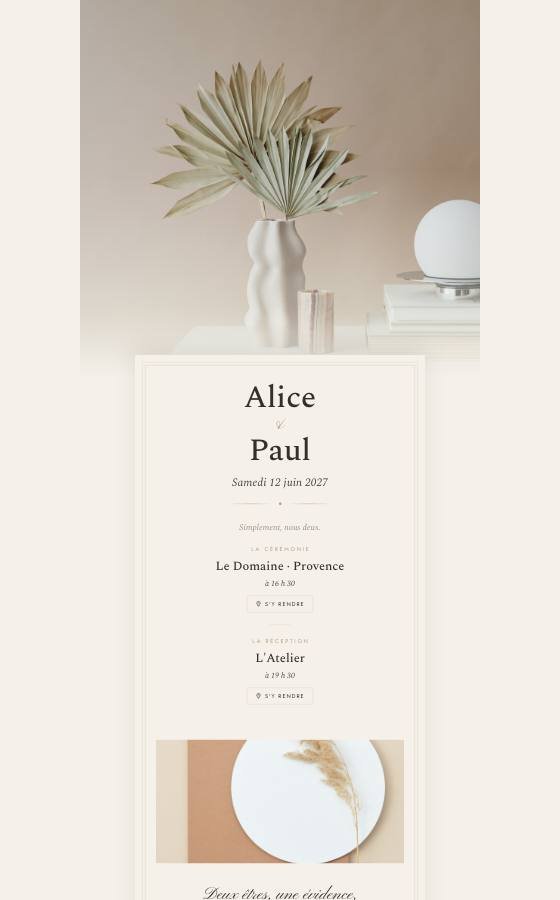

Frequently asked questions
Is twelve weeks too early for a local wedding?
It does no harm, but it buys very little. Ten weeks is the sensible ceiling for a wedding at home, and twelve earns its keep only in peak season or across a bank holiday. Past about four months the card stops reading as a request for an answer, and the chasing gets worse rather than better. Save the extra notice for guests who need flights.
When should save the dates go out for a 2027 wedding?
Six to eight months ahead for a domestic date, so a June 2027 wedding means posting between October and December 2026. Stretch that to nine or twelve months when guests are flying, because annual leave for the following summer is usually claimed in January. Send them only once the venue contract is signed and the deposit has cleared.
What do you do when guests miss the reply-by date?
Chase within three days, and chase the person rather than the household. A short message naming the caterer’s cut-off works better than a reminder about manners. Give it a week, then telephone. Digital replies help here, because you can see who opened the invitation and still did not answer, which a paper card will never tell you.
Do evening guests get their invitation at the same time?
Yes. Post both tiers on the same day, since staggering them is precisely how somebody works out they were second choice. The evening card carries the arrival time and the evening food, and leaves the ceremony out altogether. Only the day list drives catering numbers, so that tier can carry the earlier reply-by date.
Eight weeks, twelve for a plane. Whichever date you land on, TislitEvent has the card ready the day you decide.
One payment · unlimited guests · ready in 5 minutes
Sources: Royal Mail · Hitched · Bridebook · The Knot